

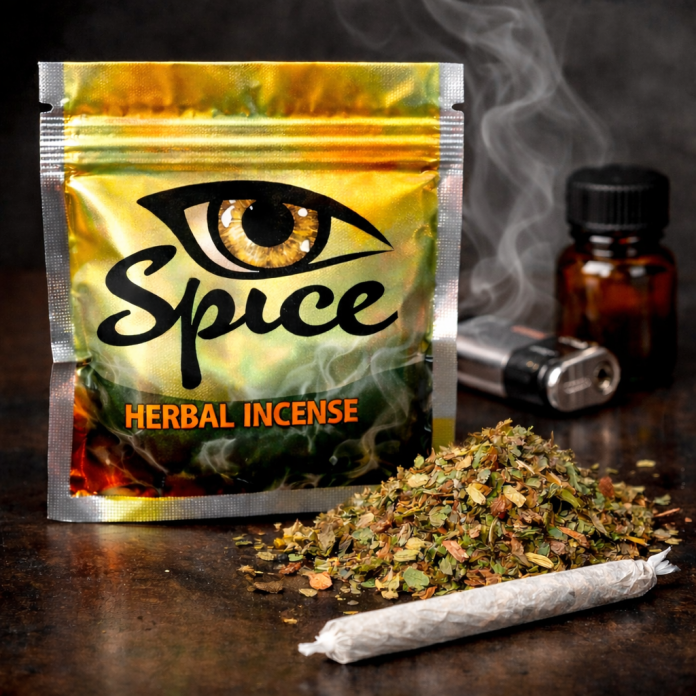
You see “extra strong” on a pack and think, finally, something that actually does something. You want real punch, not fluffy herbs that smell nice and sit there.
We get that at expresshighs.com. We like potency too.
The catch is that “extra strong” can hide sloppy production, strange additives, or risky synthetics that no one would choose on purpose. One label, many possibilities.Some great. Some really are not.
This guide is our straight answer from inside the shop: how we think about safety, why potency needs proof, and how you can judge any extra strong mix before it ever comes in your cart.
What you’ll get:
- A quick buyer checklist you can use in about 2 minutes.
- Clear warning signs that say “skip this”.
- Simple ways to buy smarter so effects feel more predictable.
Fast Buyer Checklist: Safe, Potent Extra Strong Herbal Mixtures in 2 Minutes
Use this pass or fail checklist on any product, ours included. It keeps your head clear when the marketing gets loud.
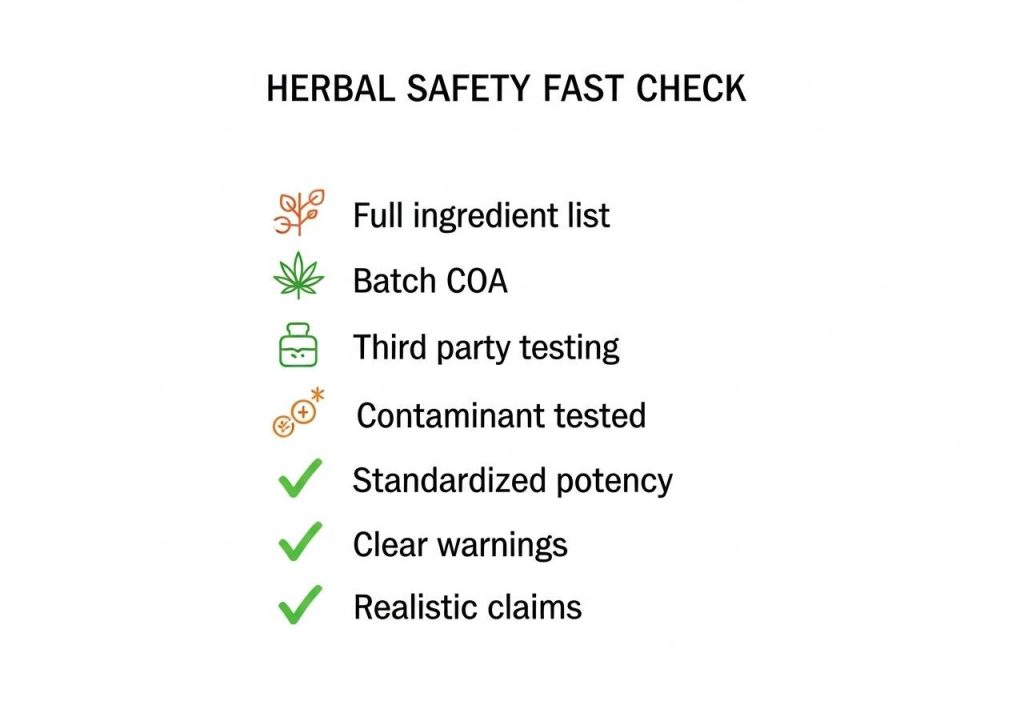
| Decision Box: 7 Critical Checks |
| 1. Full Ingredient Disclosure: All ingredients listed with names you can search. No “proprietary blends” as the only detail. |
| 2. Batch-Specific COA: A Certificate of Analysis is available for the exact lot you buy. |
| 3. Verified Third-Party Testing: COA comes from an accredited lab (look for ISO/IEC $17025$). |
| 4. Clean Contaminant Panel: Tested for heavy metals, microbes, pesticides, and solvents. |
| 5. Potency Standardization: Label states the amount of key active compounds or clear extract ratios. |
| 6. Clear Interaction Warnings: Mentions risks with meds, pregnancy, or key health conditions. |
| 7. No Extreme Claims: No promises of “instant cures” or “perfect safety”. |
Scoring rule:
- 0 to 2 fails: maybe, but question it.
- 3 or more fails: skip and pick another product.
What “Extra Strong” Really Means (And What It Doesn’t)
“Extra strong” sounds scientific. Often it is not.
Sometimes it just means someone picked a bold font.
Here is what “extra strong” usually points to in real use:
- Higher dose per serving:
More plant material or extract packed into each gram, scoop, or cone. Stronger per hit. - Higher extract ratio:
A concentrated extract, like $10{:}1$ or $20{:}1$, so you get more active parts from less raw herb. - Stronger scent profile:
For incense or potpourri, a heavier aroma that fills a room fast. Smell is not equal to physiological impact. - Pure marketing:
The words are there, but no testing or numbers to support them.
Potency can swing a lot between brands that look similar. One curcumin product might have $100$-fold more active material than another that sounds the same.
Without lab data, “extra strong” is just a guess in fancy packaging.
How To Judge Safety First (Before Potency)
More strength is pointless if the product is dirty or badly put together. Safety is the gate you pass before you ever think about how strong something feels.
Use this table as a simple reference.
| Safety Signals (Green Lights) | Red Flags (Warning Signs) |
| Full ingredient list with real amounts | “Proprietary blend” as the main info with no breakdown |
| Clear guidance on use, side effects, and interactions | No real dosing guidance or safety notes |
| Batch-specific COA you can actually request or see | No COA or the same generic PDF for every product |
| Tested for heavy metals, microbes, and pesticides | No mention of contaminant testing at all |
| Made in a GMP-compliant facility | Vague sourcing like “from the best farms worldwide” |
| Company gives a physical address and working contact options | Seller is basically anonymous or only reachable through a form |
| Batches feel, look, and smell fairly consistent according to customers | Reviews mention big differences from one order to the next |
| Evidence that potency stays stable through shelf life | No info on how long the product stays active or safe |
Ingredient Transparency: No Mystery Blends
If a company will not tell you what is inside, they are asking you to trust blind. That is too much trust for something your body might interact with.
We do not think trust should work that way.
Watch for these patterns:
- Label says “Proprietary Herbal Blend”…
Assume cheaper ingredients fill most of the weight unless proven otherwise. - Label says “Aromatic Mix” or “Herbal Incense”…
That usually means scent use only. Do not ingest or inhale directly unless the label and testing clearly support that use. - No quantities per ingredient listed anywhere…
Close the tab. You cannot even estimate risk or compare with studies.
Full disclosure lets you check for allergies, interactions with your meds, or herbs you simply do not want. Without that, you are guessing with your own health, and frankly that is one guess too many.
Third-Party Testing: What To Ask For (COA That Actually Helps)
A Certificate of Analysis is your evidence that someone outside the brand has checked what is inside the pack. Some COAs are marketing props. Some genuinely useful.
You want the second type.
COA checklist:
- Batch or lot number:
It should match the number on your product so you know you are looking at the right test. - Recent test date:
Old tests give false comfort. Ingredients and processes change. - Identity confirmed:
The lab confirms it is the herb the label claims, not a cheaper cousin. - Potency results:
Active compounds listed clearly, often in mg per g or as a percentage. You can then compare with known ranges that have been studied. - Heavy metals panel:
Data for lead (Pb), mercury (Hg), cadmium (Cd), and arsenic (As), with pass limits. - Microbial panel:
Shows absence or low levels of harmful bacteria, mold, and yeast. - Pesticides and solvents:
Results for common agricultural chemicals and extraction solvents. - Pass or fail standards listed:
The document states the limits used so you can see what “pass” actually means.
Accredited labs often rely on methods like HPLC or GC-MS for accurate numbers. If a brand cannot show any of this when asked, quality control is probably more of an idea than a habit.
Contaminants & Impurities: The Risks People Forget
Herbs live in soil, water, sun. They pick up what the environment holds. That can be great or quite problematic.
You cannot see most of those risks by looking at the product.
Key contaminant types your product should be checked for:
- Heavy metals:
Lead, mercury, cadmium, and arsenic from soil, water, or old equipment. - Pesticides:
Residues from farm spraying or storage treatment. - Microbes:
Bacteria, mold, and yeast from poor drying, transport, or storage. - Residual solvents:
Chemicals left behind from extraction, especially in high-extract products. - Hidden adulterants:
Undeclared drugs or strong synthetic agents that give a “kick” but carry high risk.
A solid COA is the only honest way to know these are under control. Anything else is guesswork, and there is already enough of that online.
Potency That’s Real: Standardization, Active Markers, Consistent Batches
Real potency is repeatable. That is what most people are actually chasing. You use a product once, it works in a certain way. Next pack, similar feel.
That pattern does not happen by accident.
Brands that take this seriously talk about:
| Potency Proof: What Serious Brands Show |
| Standardized marker: Label lists a guaranteed percentage, for example “$95\%$ curcuminoids” or similar. |
| Acceptable batch variance: Potency usually kept within about $\pm 10\%$ from batch to batch. |
| Stability data: Information or claims that the active level holds through the printed expiration date. |
| Bioavailability support: If they claim better absorption, they explain how, such as adding piperine to curcumin. |
This kind of detail means you are less likely to get one pack that feels mild and the next that feels like three stacked on each other. Your body does not like that guessing game.
Evidence Check: What Counts As “It Works”
Stories and traditions matter. They are a starting point, not the finish line.
For extra strong mixes, you want more than stories.
Look for brands or blends that:
- Reference peer-reviewed studies that use the same herb form or a similar extract level.
- Avoid promising outcomes that reach far beyond what those studies actually measured.
Evidence snapshots:
- St. John’s Wort:
Multiple trials suggest it can help with some depressive symptoms in certain people, sometimes in a range similar to SSRIs.
It also carries serious interaction risks with other medications. - Multi-herb blends:
Many formulas from Chinese or Ayurvedic practice have been studied, but trials can be small and methods vary. Good starting data, but not a blank check for huge claims.
Marketing language can sprint far ahead of evidence. If a claim sounds like magic, odds are the data behind it is fairly thin.
High-Risk Ingredients Often Found In “Extra Strong” Mixes (And Why They Matter)
Some extra strong blends do not get their power from higher doses of gentle herbs. They get it from ingredients with a known track record of trouble.
You deserve to know their names.
- Ephedra (Ma Huang)
- Why it is used: Energy, appetite control, weight loss.
- The risk: Linked with high blood pressure, strokes, heart attacks, seizures, and death. Many regulators banned ephedra for good reasons.
- Kava
- Why it is used: Relaxation and easing anxious feelings.
- The risk: Reports of severe liver injury, especially with heavy or long-term use.
- Comfrey
- Why it is used: Traditional use for wounds or joint discomfort.
- The risk: Contains compounds that can damage the liver and possibly raise cancer risk.
- Yohimbe
- Why it is used: Often sold for male performance and fat-burning.
- The risk: Can cause irregular heartbeat, high blood pressure swings, kidney issues, and has been linked to deaths.
- St. John’s Wort
- Why it is used: Mood support.
- The risk: Can trigger serotonin syndrome with antidepressants and reduce effectiveness of many medications, including birth control.
- Ginkgo, Hawthorn, Goldenseal
- Why they are used: Memory, circulation or heart health, and immune support.
- The risk: All three can change how critical meds work, especially blood thinners and heart drugs.
Extra strong blends that mix several of these can be especially tricky. The label might look herbal and gentle, while the interaction profile is very serious.
Interaction Check: The Stuff That Can Go Wrong With Meds
Mixing herbal products with prescription drugs is chemistry, not guesswork. Some combinations are fine, others dangerous, and from outside they can look the same.
A quick talk with a pharmacist can save you real trouble.
| Herb | Interacts With | What Can Happen |
| St. John’s Wort | SSRIs, antidepressants, birth control, warfarin | Serotonin syndrome, lower drug levels, treatment failure |
| Ginkgo | Warfarin and other blood thinners | Higher bleeding risk, including serious internal bleeding |
| Hawthorn | Heart meds like beta blockers or digoxin | Stronger effects, risk of irregular heartbeat or low blood pressure |
| Goldenseal | Many prescription drugs processed by liver enzymes | Reduced drug levels or, sometimes, raised levels and toxicity |
The “do not guess” rule:
If you take any prescription medication, especially more than one, or drugs with narrow dosing ranges, speak with a doctor or pharmacist before adding a strong herbal product. The chemistry there is not visible, but the impact can be.
Who Should Skip Extra Strong Herbal Mixtures (Or Get Medical OK First)
Some groups live closer to the edge of risk. For them, a small change in blood pressure, clotting, or liver load matters more.
Extra strong herbs can push those edges without warning.
Think very carefully or get medical sign-off if you are:
- Pregnant or breastfeeding
- A child or teenager
- An older adult on multiple medications
- Living with a weakened immune system
- Scheduled for surgery soon, especially with general anesthesia
If this is you, use this simple plan:
- Bring the exact ingredient list to your pharmacist. Ask directly about interactions.
- Steer away from blends with long ingredient lists where you cannot track what is doing what.
- Stop all herbal products at least two weeks before any planned surgery, unless your medical team clearly says otherwise.
Even if a product is easy to buy online, that does not mean it fits your situation.
Herbal Incense Reality Check: Extra Strong, “Legal Highs,” Unpredictable Contents
“Herbal mixture” on a label can mean two very different things. One is closer to a supplement or tea. The other is incense, potpourri, or so-called “legal highs”.
Those categories should be treated very differently.
Investigations have found that many products sold as “herbal incense” are ordinary plant matter sprayed with synthetic cannabinoids. Those are lab-made chemicals acting on the same systems as cannabis, often far stronger and less predictable.
Reactions have included seizures, paranoia, psychosis, heart problems, and deaths.
To add a legal shield, packaging often says “not for human consumption”. The phrasing is legal, the risk is still human.
Safety directive:
Never inhale or ingest any incense or potpourri product that is not explicitly labeled and laboratory-tested for that kind of use. If someone has chest pain, confusion, seizures, or extreme agitation after using one of these, seek emergency care right away and keep the pack for the medical team.
What To Check Before Buying
If you are browsing vendors, you will see a lot of bold claims and bright packaging. That includes us at Extra Strong Herbal Mixtures from Express Highs.
We think it is fair you know what is clear and what still needs more clarity.
Express Highs lists a broad range of products with different apparent strength levels and discreet worldwide shipping. In the material currently available, products are stated as potpourri or incense, not for human consumption, and responsibility is placed on the buyer. Medical questions are directed toward your personal doctor.
At the same time, detailed ingredient quantities, strong interaction warnings, pregnancy guidance, or batch-specific COAs are not yet shown for every item in that material.
Examples from the provided info:
- “Herbal Spliff Mix” ($250$ g):
Ingredients mentioned include rose petals, raspberry leaf, mullein, red clover, and marshmallow root. Exact quantities or defined active compounds are not listed there. - “Bizarro Herbal Incense” ($25$ g):
Described as an “ULTRA Strong Blend”. No full ingredient breakdown is given in the available text.
So before you buy from any online shop, ours or anyone else, run this small checklist:
- ✅ Check the domain:
Confirm you are truly on the official site, not a fake copy. - ✅ Read the product description closely:
Are ingredients named clearly, with context on use, or is it mostly hype words? - ✅ Look for testing info:
See if there is any mention of batch-specific COAs or outside lab testing. If you find none, you are deciding with less information. - ✅ Understand shipping and origin:
Note where it ships from, estimated times, and how tracking works. - ✅ Find customer support:
Make sure you can reach a real person or team if something goes wrong.
You have more power than you think as a buyer. Asking questions and expecting clear answers shapes how brands, including expresshighs.com, move forward.
Scorecard: Quick Rating System For Any Extra Strong Blend (Use This In Reviews)
This scorecard helps you step back from the hype and treat products more like a checklist than a dream. You can even paste this into your own notes or reviews.
| Criteria (Score $0$–$5$) | Product: “Hypothetical SUPER STRONG Blend” | Score |
| Ingredient transparency ($0$–$5$) | Label says “Proprietary Energy Matrix $500$ mg”. No further breakdown. | $1/5$ |
| Testing & COA quality ($0$–$5$) | No COA on the site. Support never replied to questions. | $0/5$ |
| Contaminant safety coverage ($0$–$5$) | Claims “all natural” but shows zero lab data for metals or pesticides. | $0/5$ |
| Potency proof & consistency ($0$–$5$) | Says “extra potent” with no standardization or marker percentage. | $1/5$ |
| Claims & evidence honesty ($0$–$5$) | Promises “limitless energy instantly” with no references. | $1/5$ |
| Total score | Product is high risk and low trust. Best to avoid. | $3/25$ |
You can tweak the scoring, but the act of scoring itself slows your decision and usually improves it.
Real-World Buying Tips: Better Results Without Big Risks
You do not need a lab in your kitchen to be a smarter buyer. Small changes in how you start and track use make a big difference.
Think of it as your own mini-experiment.
- Start low and take notes.
Use the smallest practical amount first and write down timing, effects, and any side issues. - Avoid stacking extra strong products.
If you mix several powerful blends, you will not know which one drove the good or bad effects. - Prefer single-focus formulas.
A product with three or four herbs is easier to understand than one with twenty. - Stop quickly if something feels wrong.
Keep the pack and note the time and amount, in case a doctor or poison center needs details. - Report serious reactions.
In the U.S., you can use the FDA Safety Reporting Portal. Other countries have similar systems.
Real feedback helps other users and pushes brands to tighten standards, including us.
FAQ
How can I tell if “extra strong” is real or just marketing?
Check the numbers and documents, not just the adjectives. A real claim will show standardized levels of active compounds, such as $95\%$ curcuminoids, plus a batch-specific COA from an ISO/IEC $17025$ accredited lab.
If no such proof appears, treat “extra strong” as decoration, not data.
What certifications actually matter?
Look for seals from groups like NSF, USP, or BSCG, and confirm them on the certifier’s site. These usually mean the product was checked for identity, purity, and contaminants under clear rules such as GMP under $21$ CFR $111$.
Logos without a way to verify them online should not carry much weight.
What does a batch-specific COA look like?
It is usually a PDF with:
- Product name
- Matching lot or batch number
- Test date
- Potency data for specific active compounds, often with percentages or mg per serving
- Contaminant results, including heavy metals, microbes, pesticides, and residual solvents
- Lab name and accreditation details, such as ISO/IEC $17025$
If anything critical is missing, your confidence should drop a bit.
Which ingredients have the biggest interaction risks?
St. John’s Wort is one of the strongest for interactions, affecting antidepressants, birth control, and more. Goldenseal, Ginkgo, and Hawthorn also show clinically meaningful interactions with common heart and blood-thinning drugs.
If any of these appear on a label and you take meds, talk to a professional first.
What should I do if a product has no COA?
The simplest safety move is to skip it and choose something more transparent. A missing COA suggests testing either was not done or is not being shared.
With so many products on the market, you have room to be choosy.
Which herb is the most powerful?
“Powerful” can mean helpful or harmful. Ephedra is very strong for stimulation and weight loss but was banned in many places because of heart and stroke risks.
For most people, the better question is which herb is appropriate, at what dose, for their goal and health profile.
What is the strongest natural sedative?
Kava and Valerian are often mentioned for stronger calming or sedative effects. Kava, however, has been linked with liver stress and injury, especially at higher or repeated doses.
Milder herbs like chamomile or lemon balm are gentler and safer for many, even if they feel less intense.
Which herbs mix well together?
Traditional systems like Ayurveda and Chinese practice use long-tested pairs, such as ashwagandha with tulsi for stress. They are better studied than random home mixes.
Unless you know the interaction science, stick with combinations that have at least some research or long safe use behind them.
What is the strongest calming herb?
Kava is often named because its calming effect can be firm and clear. That same strength comes with real concern for liver health, particularly with heavy or long use.
For many people, starting with gentler options like chamomile, lemon balm, or lavender is a wiser long game.
Conclusion: A Safer Path To “Extra Strong” That Still Makes Sense
The search for extra strong herbal mixtures is really a search for products that actually does something you can feel. We understand that at expresshighs.com.
Real strength, though, sits on three legs: transparency, testing, and consistency.
A brand that shows its data, explains its labels, and keeps batches steady is giving you something to work with. A brand that hides behind mystery blends and giant claims is asking for trust it has not earned.
Before your next purchase, use the checklists and scorecard from this guide, even if you buy from us. They help you look past colors and slogans and focus on information that affects your body.
In the end, the smartest, calmest choice you make is the strongest thing in the whole process.
The information provided on this blog is intended for educational and informational purposes only. It is not meant to be a substitute for professional medical advice, diagnosis, or treatment. The content regarding any substances, including effects, dosage, safety considerations, and legal status, should not be construed as encouragement or endorsement of illegal drug use.
Laws and regulations concerning controlled substances vary significantly by country, state, and region and are subject to change. Readers are responsible for understanding and complying with the laws applicable in their own jurisdiction.
The author and Blog.ExpressHighs.com make no guarantees about the accuracy, completeness, or reliability of the information presented and assume no liability for any outcomes related to the use of this content. If you are considering issues related to health, legality, or safety, consult a qualified professional.
By continuing to read this blog, you acknowledge that you understand and agree to this disclaimer.


