

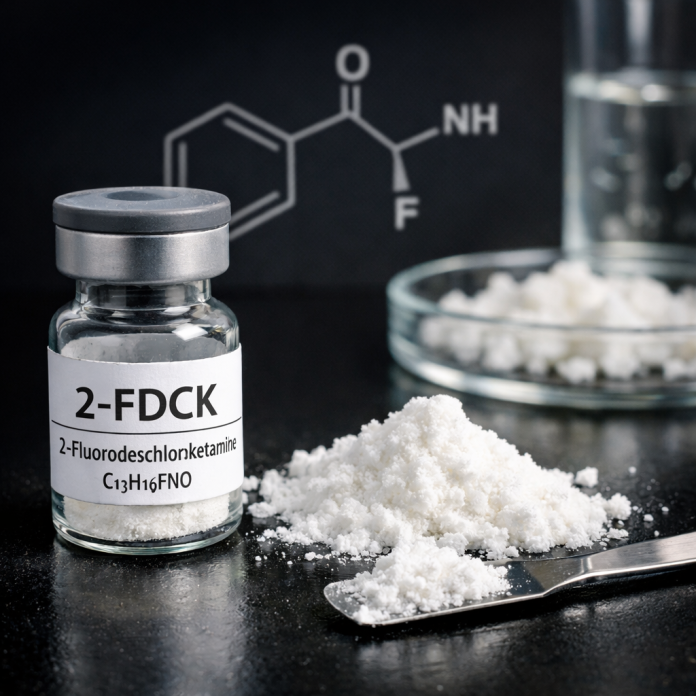
You’re here for clarity on 2-FDCK’s legal status in the Netherlands. People often hear it’s “not listed” on the Opium Act or see it on research chemical shops. This can be misleading. Assuming a gray area provides legal protection is incorrect and can lead to problems.
Here’s the answer. This article explains the exact legal status from 2024 to 2026. It details how the Dutch Opium Act and the new List IA group ban changed things, outlines penalties, and shows how to verify official rules yourself. This article provides facts, not myths.
2-FDCK Legal Status in the Netherlands: 2024-2026 Snapshot
Quick Answer:
As of 2024, 2-FDCK was not explicitly named on the main drug lists, but it always carried risks. On July 1, 2025, a new law (List IA) came into effect, establishing a “group ban” that includes certain families of chemicals. The specific classification of arylcyclohexylamines (which includes 2-FDCK) under this group ban depends on new administrative additions to List IA. Therefore, while not directly named on List I or II, 2-FDCK’s legality in 2026 depends on whether arylcyclohexylamines have been formally added to List IA. If so, it is treated as a banned and controlled substance in the Netherlands.
The status evolved rapidly. Here’s how it looks year by year:
- 2024: 2-FDCK was not individually named on List I or List II of the Opium Act. However, it was risky. Authorities could enforce laws based on quantity, intent to supply, or its similarity to controlled analogs like ketamine. Importing it was uncertain, as Customs could seize it.
- July 1, 2025: A new law, known as List IA, took effect. This “group ban” made entire families of substances illegal at once. Initial List IA groups include certain phenethylamine derivatives (e.g., cathinones), synthetic cannabinoids, and 4-aminopiperidine derivatives (fentanyl analogs). Arylcyclohexylamines (the chemical category 2-FDCK belongs to) were not among the initial List IA groups but could be added later under the List IA mechanism.
- 2026: If arylcyclohexylamines have been added to List IA, 2-FDCK is considered banned and controlled. Dutch research chemical shops would stop selling it, and enforcement would treat it like any other hard drug. If they have not been added, its status remains debated, but risks of seizure or prosecution for intent to supply would still exist.
| Year | Legal Label People Use | What It Means in Real Life | Main Risk |
| 2024 | “Gray area” / “Not listed” | Risky. Not explicitly banned by name, but enforcement could still intervene. | Getting caught with large amounts or importing it. |
| July 1, 2025 | “Group ban potential” | List IA group ban takes effect. If arylcyclohexylamines are added, 2-FDCK becomes illegal under this ban. | Uncertain legal status if arylcyclohexylamines are not yet covered, but still risky for supply/import. |
| After July 1, 2025 | “Banned by group” (if applicable) | If arylcyclohexylamines are added to List IA, possession, sale, and import are clearly illegal. Otherwise, prior risks remain unchanged. | Criminal charges for possession, sale, or production if covered by List IA, or for supply/import if not covered. |
Timeline: Key Changes from 2024 to 2026
| Date | Event | What It Means |
| Oct 2023 | WHO recommends international control | International organizations signal to countries like the Netherlands to act on certain substances. |
| 2019 | EU NPS rules added to Dutch Law | This allowed for banning new psychoactive substances (NPS) one by one, leaving loopholes. |
| 28 Jan 2025 | Dutch Senate approves List IA | The critical legislative step. The new “group ban” law is officially passed. |
| July 1, 2025 | List IA enters into force | The group ban becomes active law for initial groups (phenethylamine derivatives, synthetic cannabinoids, 4-aminopiperidine derivatives). Arylcyclohexylamines (including 2-FDCK) are not initially included but can be added later via Article 3aa. |
| Feb 2026 | Market reflects the ban (if applicable) | If arylcyclohexylamines are added to List IA, the transition is complete. Dutch shops stop selling 2-FDCK, and enforcement treats it as banned. If not added, its status remains in a “gray area,” with risks of seizure, large-quantity charges, or classification as an analog. |
The Dutch Law: The Opium Act (Opiumwet) Explained
The Opium Act (Opiumwet) is the foundation of Dutch drug law. It categorizes substances:
- List I (“hard drugs”): Substances with unacceptable risks (e.g., cocaine, heroin, MDMA). Penalties are severe.
- List II (“soft drugs”): Substances considered to have acceptable risks (e.g., cannabis). Policies are more tolerant for personal use.
The law prohibits almost all activities with these substances unless exempt: possession, production, sale, transport, import, and export. After the 2025 change, if 2-FDCK’s chemical family (arylcyclohexylamines) is added to List IA, it would fall under rules similar to List I substances for enforcement.
The argument of “it’s not named on the list” is still relevant if arylcyclohexylamines are not added to List IA. However, the List IA mechanism allows for future group bans to close this gap.
| Common Belief | Reality Under Dutch Law |
| “If it’s not named on List I, it’s legal.” | Partially False. Since July 1, 2025, if a substance belongs to a banned group on List IA, it’s illegal. However, arylcyclohexylamines were not initially covered, so 2-FDCK’s status depends on future additions to List IA. |
| “It’s a ‘research chemical,’ so it’s fine.” | False. That label offers no legal protection. The law focuses on the chemical structure and its potential for harm, not marketing labels. |
| “Small amounts for personal use are okay.” | Risky. Possession of any controlled substance is a criminal offense. While police may have discretion for very small amounts, there is no specific statutory threshold in the Opium Act that distinguishes fine from imprisonment based on quantity for List IA offenses. |
List IA (Group Ban) Explained: Its Impact on 2-FDCK
The old law was like trying to ban individual items. As soon as one substance was banned, chemists altered a molecule to create a “new” one that was technically legal.
The List IA group ban mechanism aims to end that.
- It targets entire families of substances with similar chemical structures.
- Initial groups covered are phenethylamine derivatives, synthetic cannabinoids, and 4-aminopiperidine derivatives.
- Arylcyclohexylamines, the family of dissociatives that includes ketamine and 2-FDCK, were not listed among the initial List IA groups but can be added later. This would make 2-FDCK and other similar variations illegal under the group ban.
The goal is to automatically include new designer drugs that are slight variations of banned ones as soon as they are created or identified.
Was 2-FDCK “Legal” in 2024?
No, not in the sense of being legally sanctioned or free from prosecution. It existed in a legal loophole, which is not the same as being legal.
While 2-FDCK wasn’t explicitly named on List I or II in 2024, significant risks existed. Law enforcement could intervene based on:
- Intent to supply: Possessing large quantities, scales, or packaging could lead to charges.
- Quantity: Beyond a personal dose raised suspicion.
- Analog interpretation: Prosecutors could argue its similarity to controlled drugs like ketamine.
- Import/Export: Customs could seize and test suspicious powders regardless of specific names. A 68 kg seizure in 2021 showed monitoring was already in place.
What This Meant for People in 2024
- Possession: You risked legal action. A small amount might be overlooked, but it was not guaranteed.
- Ordering Online: Your package could be seized by Customs, leading to an investigation.
- Crossing Borders: Carrying it posed a high risk. Border police do not consider legal loopholes.
What Changed on July 1, 2025 (And Why It Matters for 2-FDCK)
This date marks a legislative shift.
- Before July 1, 2025: The law had gaps. Regulators banned substances one by one, struggling to keep up with new designer drugs.
- After July 1, 2025: The List IA group ban mechanism came into force for initial groups of substances. Instead of banning individual substances, it introduced the possibility of outlawing entire chemical clusters, which could include the arylcyclohexylamine family to which 2-FDCK belongs.
The practical result is that the “new name, same family” tactic would no longer work if arylcyclohexylamines are added to List IA. The law would then focus on the core chemical structure.
From mid-2025 onward, 2-FDCK’s status depends on whether arylcyclohexylamines are formally added to List IA. If so, the only safe assumption is that 2-FDCK is illegal.
2026 Status: Is 2-FDCK Banned in the Netherlands?
As of 2026, 2-FDCK’s legal status depends on whether arylcyclohexylamines are formally added to List IA. If they are, 2-FDCK is effectively banned and controlled. Its legal status is no longer a “gray area”; it is covered by the List IA group ban and treated by law enforcement as a hard drug.
If arylcyclohexylamines are not yet added as of 2026, 2-FDCK remains in a legal gray area, subject to risks of seizure, large-quantity charges, or classification as an analog. Reputable Dutch research chemical vendors would likely cease selling it if its family is added to List IA, as stocking and selling it would become a clear criminal offense.
Signs Indicating a Clear Ban (if arylcyclohexylamines are added to List IA)
- List IA is in force and covers the arylcyclohexylamine family.
- Dutch research chemical shops stop selling it and may offer weaker, legal alternatives.
- Customs and forensic reports confirm seizures of the substance, treating it as controlled.
- Official government publications on the Opium Act reflect the new group-ban framework and the inclusion of arylcyclohexylamines.
Penalties and Real-World Enforcement
Breaking the Opium Act is serious. Penalties depend on whether you are caught with a small amount for personal use or are involved in selling or production.
Personal Possession
“Personal use” is not a free pass.
- Quantity is key. A single dose might be treated differently than possession of an amount for 50 people. There is no specific statutory threshold in the Opium Act that automatically dictates a fine versus imprisonment for List IA offenses.
- Context matters. Possessing the substance with multiple baggies, scales, and a large amount of cash shifts the situation from simple “possession” to “intent to supply”.
- Police discretion. Enforcement varies by region, but a conviction for possession results in a criminal record.
- A criminal record can affect travel to certain countries (like the U.S.) and employment opportunities.
Sale, Trafficking, and Production
This carries heavy penalties. The government has increased sentences to fight organized crime.
| Activity | Legal Category | Possible Maximum Penalties |
| Selling/Trafficking | Hard Drugs (List I / IA if applicable) | List I: Up to 12 years imprisonment. List IA: Up to 3 years imprisonment or a Category 5 fine (up to €82,000). |
| Stocking/Large Quantities | Hard Drugs (List I / IA if applicable) | Up to 8 years imprisonment. If List IA, up to 3 years imprisonment or a Category 5 fine (up to €82,000). |
| Import/Export | Hard Drugs (List I / IA if applicable) | Up to 16 years imprisonment. If List IA, up to 3 years imprisonment or a Category 5 fine (up to €82,000). |
Fines and Prison for List IA Violations
Violating the List IA group ban carries a maximum penalty of up to 3 years in prison or a Category 5 fine (up to €82,000). These are alternative maximum penalties, meaning a court can impose either. The law does not set a single rule converting specific quantities into a fine or imprisonment; courts use case factors to decide within these limits.
Importing, Ordering Online, and Cross-Border Travel
Getting caught often occurs at border crossings or through mail.
- Customs screens packages. They use X-rays, dogs, and intelligence to flag suspicious parcels. A “research chemical” label can draw attention.
- Lab tests are standard. If a package is seized, it goes to a lab. They identify its chemical structure. If it falls under List IA (if applicable), it can lead to charges.
- Payment and shipping records create a trail. Authorities can and do trace digital evidence back to the buyer.
Do Not Assume:
- “EU shipping” is safe. Packages crossing borders, even within the EU, can be inspected.
- “Research chemical” or “not for human consumption” labels offer protection. They are legally meaningless.
- “Small amounts cannot lead to a case. A seizure can trigger an investigation, regardless of quantity.
Research and Medical Exemptions
Exemptions (opiumontheffing) are not for private individuals. They are granted under strict conditions by bodies like Farmatec for legitimate scientific research, medical training, or pharmaceutical trade. These operations are licensed, monitored, and supervised by the Health and Youth Care Inspectorate (IGJ).
Licensed imports are documented, declared, and handled by professionals. Ordering a substance from a website for personal use is not a licensed import.
- Q: Can a private person get an exemption for personal research?
- A: No.
- Q: Does labeling an order “for research” count as an exemption?
- A: No. This is not how the system works.
Obtaining a Research Exemption from Farmatec (Opiumontheffing)
For legitimate research or analytical purposes involving controlled substances, institutions or qualified organizations can apply for an opiumontheffing from Farmatec.
Applicable Scope:
- Farmatec handles exemptions for non-cannabis controlled substances for scientific, academic, analytical-chemical research, public/animal health, training, and trade/sample analysis. These are not for personal or medical use.
Who Can Apply:
- Businesses, research institutions, public-health bodies, diagnostic/chemical labs, and other qualified organizations can apply to legally possess, use, import, or export controlled substances for approved purposes.
Application Procedure (High-Level):
- Request Form: Obtain the application form from Farmatec (forms and communications are in Dutch).
- Complete & Submit: Submit the completed application with all required supporting documentation. Incomplete applications will require completion within a specified period (e.g., six weeks) or may be rejected.
- Assessment: Farmatec acknowledges receipt and seeks advice from the Health and Youth Care Inspectorate (IGJ).
- Decision: Decisions typically take about three months for new applications and around 90 days for amendments.
- Exemption Grant: If granted, exemptions are issued on behalf of the Minister of Health and include conditions on quantities, security, storage, reporting, and allowed activities.
- Validity: Exemptions are valid for a maximum of five years. Renewals require reapplication at least three months before expiry.
Documents and Compliance Requirements:
- Proof of organizational status and legal capacity to handle controlled substances.
- Clear description of the intended research or analytical purpose, including study protocol or analytical justification.
- Specified quantities and formulations required, with justification for amounts.
- Details of security measures (physical security, access control, inventory/recordkeeping).
- Storage arrangements and procedures for destruction/disposal.
- Risk management, personnel qualifications, and training measures.
- Contact details for responsible persons and supervisory arrangements.
- Exact document lists are provided on the Farmatec application form and guidance.
Fees, Validity, and Reporting:
- Fees: An application fee (reported around €1,000) and an annual administrative fee (reported around €700) typically apply. Confirm current fees with Farmatec.
- Reporting: Holders must comply with reporting and inspection requirements. The IGJ supervises compliance.
Import/Export and Shipment Exemptions:
- Import/export of controlled substances often requires separate authorization per shipment or a special clause within the Farmatec exemption.
- Specific import/export authorizations can take three to six months. Applicants should specify planned international transfers in their Farmatec application.
How to Check the Most Current Legal Status
Laws can always change. To verify the latest status, rely on official sources.
- Official Dutch Government Publications: Check the latest versions of the Opium Act and its schedules (Lists I, II, and IA) on official government websites or the Staatscourant.
- EMCDDA: The European Monitoring Centre for Drugs and Drug Addiction provides updates on substance control across the EU.
- Farmatec/Ministry of Health: Consult their announcements for Schedule IA group additions.
- Harm-Reduction Alerts: Services like DIMS in the Netherlands post alerts about dangerous substances in circulation, indicating what is on the market, but not legal status.
Verification Checklist
- Confirm List IA is still in force.
- Check if the substance’s chemical family (arylcyclohexylamines) is covered by an active List IA group ban.
- Look for any new amendments that might have explicitly named the substance.
- Cross-reference with official Dutch government legal databases.
- When in doubt, consult a qualified legal professional, not a salesperson.
Why the Netherlands Moved to Group Bans
The Dutch government implemented group bans for several reasons:
- Closing Designer Drug Loopholes: To stop the constant cycle of chemists creating new but similar substances to bypass specific bans.
- Public Health: To protect people from the unknown dangers of untested chemicals, following reports of poisonings and other health crises.
- Fighting Organized Crime: The Netherlands had become a hub for producing and distributing these substances across Europe. A 68 kg seizure of 2-FDCK in 2021 highlighted this issue.
FAQs
1. Is 2‑FDCK the same as ketamine under Dutch law?
No, they are different chemicals. However, if arylcyclohexylamines are added to the List IA group ban after mid-2025, they would both be controlled under the same family. For enforcement purposes, they would then be treated with similar seriousness as hard drugs.
2. If it wasn’t listed in 2024, could I still get charged?
Yes. Even before the 2025 ban, you could be charged based on quantity, evidence of intent to sell (trafficking), or under laws governing medicines. It was never a risk-free situation.
3. Did the law change in 2025 or 2026?
The List IA mechanism officially became law on July 1, 2025. As of 2026, the application of this law to substances like 2-FDCK depends on whether arylcyclohexylamines have been formally added to List IA. Market and enforcement practices adapt accordingly.
4. What are the specific chemical structures or analogues of 2-FDCK that are explicitly covered under the List IA group ban as arylcyclohexylamines?
Arylcyclohexylamines were not listed among the initial List IA groups put into effect on July 1, 2025. The Opium Act’s Article 3aa provides a mechanism to add further groups to Schedule IA. Therefore, specific chemical structures or analogues of 2-FDCK as arylcyclohexylamines are not currently explicitly covered under List IA, but could be added in the future.
5. What is the exact legal text or specific section numbers within the Dutch Opium Act (Opiumwet) that define the List IA group ban for arylcyclohexylamines?
The List IA group ban system is established within the Opium Act (Opiumwet). Article 3aa allows for the addition of groups to Schedule IA. To find the exact legal text, one would need to consult the consolidated Opium Act and any subsequent amendments published in the Staatscourant, specifically looking for additions to List IA that include arylcyclohexylamines. As of the initial implementation on July 1, 2025, arylcyclohexylamines were not listed in the initial groups.
6. What are the precise quantities of 2-FDCK that would typically lead to charges of ‘intent to supply’ versus ‘personal possession’ under Dutch law, for both 2024 and after July 1, 2025?
The law does not set a single statutory rule that automatically converts specific quantities into either ‘intent to supply’ or ‘personal possession’. Courts use case factors (e.g., quantity involved, intent, packaging, presence of scales, cash, prior convictions) to determine charges. Operational thresholds for “tolerance” or prosecutorial priority can vary by policy and specific scheduling, and are not fixed in the List IA statutory text. Therefore, there are no “precise quantities” uniformly dictating these charges.
7. Does “not for human consumption” packaging change anything?
No. This label is legally meaningless and offers no protection. The law is concerned with the chemical substance itself, not the disclaimer on the package.
8. What’s the difference between List I and List IA for penalties?
List I has higher maximum penalties for large-scale trafficking and production (up to 12–16 years). Violations of List IA have a stated maximum of 3 years or a Category 5 fine (up to €82,000). However, any involvement beyond simple possession will be treated seriously.
9. How long do Opium Act convictions affect travel or work?
A criminal record from an Opium Act conviction can last for years and create significant, long-term barriers. It can prevent you from getting a certificate of good conduct (VOG) needed for many jobs and may make you ineligible to travel to countries like the USA, Canada, or Australia.
10. What are the specific criteria and threshold for fines (up to €82,000) versus imprisonment (up to 3 years) for violations related to 2-FDCK under the List IA group ban as of July 1, 2025, in the Netherlands?
For substances under the List IA ban, Article 10c of the Opium Act states that a violator can be punished with imprisonment of up to 3 years or with a Category 5 fine (up to €82,000). These are alternative maximum penalties the court can impose. The law does not define specific quantities or thresholds that automatically determine whether a fine or imprisonment is applied. Judges consider factors such as the quantity, intent (personal use vs. supply), evidence of production/trafficking, and prior convictions to make these determinations within the statutory limits.
Wrap-Up
The legal status of 2-FDCK in the Netherlands has evolved. While a “gray area” existed in 2024, the List IA group ban came into effect on July 1, 2025. The definitive legal status of 2-FDCK depends on whether arylcyclohexylamines are formally added to List IA. If they are, it is treated as a controlled, illegal substance. The risks of possessing, buying, or selling it are real and can lead to severe consequences. Always check the official, current laws. Do not base your actions on outdated information.
The information provided in Express Highs Blog is intended for educational, informational, and harm-reduction purposes only. The content published on this page does not encourage, promote, or condone the use, purchase, sale, or distribution of any controlled or psychoactive substances.
Many compounds discussed on this website may be regulated or prohibited in certain countries or jurisdictions. Laws and regulations change frequently, and it is the responsibility of each reader to understand and comply with the local laws applicable in their location before engaging with any substance mentioned.
Articles published in this category may reference scientific research, anecdotal experiences, historical context, or emerging trends. However, the content should not be interpreted as medical advice, legal advice, or professional guidance of any kind. Always consult a qualified medical professional before making decisions that could impact your physical or mental health.


