

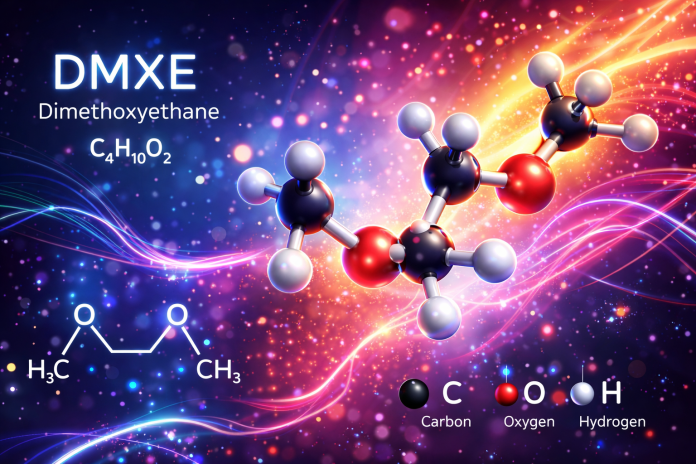
You may have seen discussions online about DMXE. However, most information is based on speculation. Separating facts from rumors is not easy. Please note, there are no clinical studies on DMXE yet. We are relying on the best information currently available.
What is DMXE
DMXE stands for deoxymethoxetamine. It is a synthetic drug in the same family as ketamine.
Why should you exercise caution?
- Unpredictable effects. DMXE may induce detachment or alter one’s sense of reality, though every individual’s experience differs.
- Serious risks. You could become confused, injured, anxious, or experience heart issues. Prolonged use can damage your bladder or kidneys.
- Legal status is unclear. Just because it is not officially banned does not mean you can buy or use it without consequences.
| Key Details | Details |
| Names/Aliases | DMXE, Deoxymethoxetamine, 3D-MXE, “Warm-K” |
| Drug Class | Arylcyclohexylamine (Dissociative) |
| What’s Known | Produces effects similar to ketamine and MXE. |
| What’s Unknown | Almost everything else. There are no clinical studies or solid data regarding dosing or long-term use. |
| Reported Methods | People have used it orally, nasally, and other ways, but potency and effects change depending on how you take it. |
| Key Safety Measures | Test your substance. Labels can be incorrect. Do not mix with other drugs, avoid taking more doses, and do not use alone. |
What DMXE is (and what it isn’t)
Basic facts
- Family: DMXE belongs to the same group as ketamine, PCP, and now-banned MXE.
- Other Names: You will hear DMXE, 3D-MXE, or deoxymethoxetamine.
- Appearance: Usually appears as a white or off-white powder. However, appearance alone is not enough to identify it for sure.
What’s actually known vs just guessing
There is a lot that is unknown.
| Known | Unknown |
| It is similar in structure to MXE. | Safe, reliable dosing information. |
| It causes dissociative effects. | Long-term impacts on health. |
| No clinical studies in people. | How it interacts with other medicines. |
| Mislabeling and contamination occur frequently. | How DMXE is different from MXE or ketamine in real use. |
What people say DMXE feels like (and why it varies)
Since no one has conducted real studies, effects are assembled from reports and what we know about similar drugs. Results vary significantly.
Mental and sensory effects
- Feeling disconnected: You might feel as though you are outside your body, or not fully “here.”
- Altered thinking: Time might seem slow or fast, and your thoughts could feel strange or jumbled.
- Confusion: It might become difficult to talk or think clearly.
- Anxiety or panic: Some people experience paranoia or panic attacks if the experience becomes overwhelming.
Physical effects
- Clumsiness: Walking becomes difficult. There is a higher chance you could fall or get hurt.
- Heart strain: Your heart rate might increase and your blood pressure may rise.
- Nausea and restlessness: Some vomit; others cannot sit still.
After-effects (the “next day” hangover)
You might still feel unwell after the main effects have passed.
Do not plan to drive or do anything requiring a clear head for a day or two after. Fatigue, brain fog, and mood swings are not uncommon.
How long DMXE lasts: what to expect
There are no hard numbers, because the drug and how people respond are so inconsistent.
Drugs like MXE usually last 3–7 hours. Reports suggest DMXE often lasts longer, but reports vary.
Several factors affect its duration:
- The actual drug: It might not even be DMXE. It could be something else entirely.
- Your body: Tolerance, metabolism, and even your mindset matter.
- How you take it: Snorting, swallowing, or other routes all change onset and duration.
Main safety risks
This involves making smart choices. These risks are based on what is known for drugs in this class.
Short-term risks (right after taking)
- Accidents: Confusion and poor balance can lead to dangerous situations.
- Mental distress: Paranoia or panic can be overwhelming.
- Inability to communicate: If you are heavily impaired, you might not be able to ask for help.
- Heart problems: Fast heartbeat, chest pain. Do not ignore these.
- Choking hazard: If you are heavily intoxicated and vomit, choking is a real danger.
Long-term risks (from heavy or regular use)
What happens to heavy ketamine or MXE users is likely to occur with DMXE too.
- Bladder damage: This is serious. You might experience pain, urinate more often, or see blood in your urine. For some, the damage is permanent and requires surgery.
- Timing: Issues can show up in months for some, or after years in others. Early symptoms sometimes get mistaken for regular infections.
- Kidney problems: Bladder trouble often occurs alongside kidney issues.
- Mood and memory problems: Long-term use can harm mental health and memory.
- Dependence: Chasing the experience can dominate your life, costing you health, money, and relationships.
What if you damage your bladder?
First, you must stop using DMXE or similar drugs. The sooner, the better. Treatment may involve medications for pain or urgency, procedures (including surgery for serious cases), and working with a urologist. Some damage can heal if you quit early. Delaying treatment might make some problems permanent.
Dependence and redosing (the loop)
Dissociatives can make you want more before the last dose has worn off. This is when risks can escalate quickly. If you start using to escape life or notice you’re increasing your dose, or using alone more, those are warnings.
The biggest risk: mislabeling and adulterants
The biggest danger may not be DMXE itself. It is ordering DMXE and receiving something completely different, possibly more dangerous.
Not always what it says on the bag
Suppliers may mix up or swap in other chemicals, like DCK, 2-FDCK, O-PCE, 3-MeO-PCP, or completely unrelated substances.
Each has its own risks. A “normal” dose of one could be a dangerous dose of another.
How to test your substance
You cannot tell what a powder is by looking. Use reagent kits.
- Use at least two tests. Do not rely on just one; kits like Morris and Froehde help spot fakes.
- Compare results. Use a color chart from reliable sources like Dancesafe or Bunk Police.
- Not sure? Discard it. Any color you were not expecting means do not risk it.
- Maintain your kits. Store them properly and check expiry dates. Outdated kits are not reliable.
Procedure for a reagent test (DMXE example):
- What you need: Morris, Froehde, Mecke, Ehrlich, Marquis test kits. A ceramic/glass plate, a tiny sample, color chart.
- Procedure:
- Put a pinhead-sized bit of powder on the plate.
- Apply a small amount of reagent onto it. Avoid touching the bottle to the powder.
- Watch the color change for the right amount of time.
- Check the color against your trusted chart.
- Repeat with other reagents, each time with a clean plate.
- Indicators:
- DMXE: Usually turns purple with Morris. Not much change with Mecke.
- Adulterants: Ketamine and others make different colors on various tests.
- If the color is incorrect: Do not use it. Retest if needed, but the safest option is to discard it.
Extra safety steps that don’t need fancy equipment
- Never use alone. Have someone sober with you who knows what you’ve taken.
- Do not mix. See below for more on why combinations raise risk.
- Stay hydrated but not overly so. Just enough to feel comfortable.
- Keep your phone charged. Know how to call emergency services.
Combinations to strictly avoid
Combining DMXE with other drugs is hazardous. Some combinations are extremely dangerous.
- Alcohol, opioids, benzos: Mixing these depressants with DMXE raises overdose and suffocation risks.
- Stimulants (like cocaine or amphetamines): You are putting significant stress on your heart.
- Antidepressants, especially those affecting serotonin: No solid info, but best to avoid.
- Other dissociatives: Combining them increases the risks.
When to call for help (what to watch out for)
Notice these in yourself or others? Call emergency services right away.
- Trouble breathing or blue-tinged skin.
- Passing out, not waking up, or seizures.
- Chest pain, severe confusion, erratic or dangerous behavior.
- Repeated vomiting along with confusion.
- Loss of consciousness.
While waiting for help:
- Be honest. Tell responders exactly what was taken.
- Stay with the person. Keep them safe.
- If they are drowsy or vomiting, roll them on their side.
- Provide information. The more details, the better for paramedics.
Legal status: what you need to know
The legal status of DMXE is unclear and can change suddenly.
Even if a drug isn’t officially listed, it often still counts as illegal due to “analogue” laws. Here is a basic rundown in several places:
| Place | Listed/Scheduled? | What this means | Legal Penalties | Notes |
| United States | Not named specifically. | Could be prosecuted as an analogue of MXE. | Penalties are as harsh as those for Schedule I or II drugs; can mean serious jail time and fines. | Local laws vary, too. |
| United Kingdom | Not named, but MXE is banned (Class A). | Can be prosecuted as an analogue or under psychoactive laws. | Up to life in prison for supply, 7 years for possession, massive fines possible. | Very strict. |
| Canada | Unclear. | Could be seen as similar to other banned drugs. | Still faces serious criminal penalties. | Laws differ by region. |
| Australia | Complicated; varies state to state. | Could fall under broad drug laws, importing is especially risky. | Penalties from fines, to years (or life) in prison, depending on amount and state. | Assume it’s not legal. |
| European Union | Varies by country. | Some countries have laws that could cover DMXE. | Ranges from fines to jail, depending on country. | Check your country. |
Conclusion: Always look up your local laws yourself. Do not just take someone else’s word for it. Also buy dmxe from a trusted vendor.
DMXE, ketamine, and MXE: how they compare
To see where DMXE fits, here is a breakdown.
- DMXE: The primary unknown. Very little confirmed information. Reports suggest it acts a lot like MXE. Risks and effects are largely uncharted.
- MXE: Was once popular, now banned in most places. More potent and longer-lasting than ketamine, with real risk to your bladder.
- Ketamine: The best studied of the three. Used in medicine, but frequent use brings a heavy risk of addiction and bladder damage. Typically shorter-acting.
| Substance | How Well-Studied | Potency vs. Ketamine | Onset (Oral/Nasal) | Peak | Duration | Main Warnings |
| DMXE | Not studied | Reports say potent (few details) | Oral: 45-90 min Nasal: 15-30 min | 1-2 hrs | 4-7 hrs | Unknowns, mislabeling, all same risks as class. |
| MXE | Somewhat | Stronger than ketamine | Oral: 30-90 min Nasal: 10-30 min | 1-2 hrs | 3-7 hrs | Bladder risk, lengthy high, potential for dependence. |
| Ketamine | Well studied | Baseline | Oral: 15-30 min Nasal: 5-15 min IM/IV: fast | 15-60 min | 1-3 hrs | Bladder damage, addiction, mental risks. |
Frequently Asked Questions
What is DMXE?
A man-made dissociative drug, best thought of as a cousin of ketamine and MXE. No good safety info.
Is it the same as MXE?
No. It’s similar, but not identical.
Will it show up on drug tests?
Not on standard work drug screens. But specialized tests in labs or legal settings can detect it.
Is MXE legal in the US?
No. It’s considered an illegal substance if you have it to use or sell. DMXE could be treated the same.
How does DMXE work?
Most likely by blocking certain brain signals, the same way as ketamine.
Can you trust the label?
No. The only way to know what you have is to test it yourself.
Does “research chemical” mean legal?
No. It’s just a marketing label. The law can still apply.
How long before you can drive?
Wait at least 48 hours. Effects can last and leave you impaired longer than you think.
What’s the top harm-reduction step?
Always test the substance using multiple reagent kits.
Key takeaways
- DMXE is mostly unknown. You are stepping into something without real safety data.
- Mislabeled substances are the big risk. Always test what you have.
- Don’t mix drugs or redose often. That’s how most emergencies start.
- Legal doesn’t mean risk-free. Laws can change and could cover DMXE at any time.
- If something feels wrong, get medical help early. Paramedics are there to help, not judge.
Disclaimer
The information provided in this article is intended for informational purposes only and does not constitute medical, legal, pharmaceutical, or professional advice of any kind. Express Highs makes no representations or warranties regarding the accuracy, completeness, or suitability of the content for any particular purpose. Readers should not rely on this content as a substitute for advice from a qualified medical professional, legal counsel, or other relevant expert.
The products and substances discussed on this blog may be subject to varying legal restrictions depending on your country, region, or jurisdiction. It is the sole responsibility of the reader to be aware of and comply with all applicable local, national, and European Union laws and regulations before purchasing, possessing, or using any product referenced herein. Express Highs accepts no liability for any consequences arising from actions taken based on the content of this article.
This blog is intended for adults only. By reading this content, you confirm that you are of legal age in your jurisdiction.
Nothing in this article is intended to diagnose, treat, cure, or prevent any disease or medical condition. Any health-related claims discussed are not evaluated by the European Food Safety Authority (EFSA) or any other regulatory body unless explicitly stated.
Express Highs reserves the right to update or remove content at any time without notice. All content is published in good faith and for general informational purposes only.


