

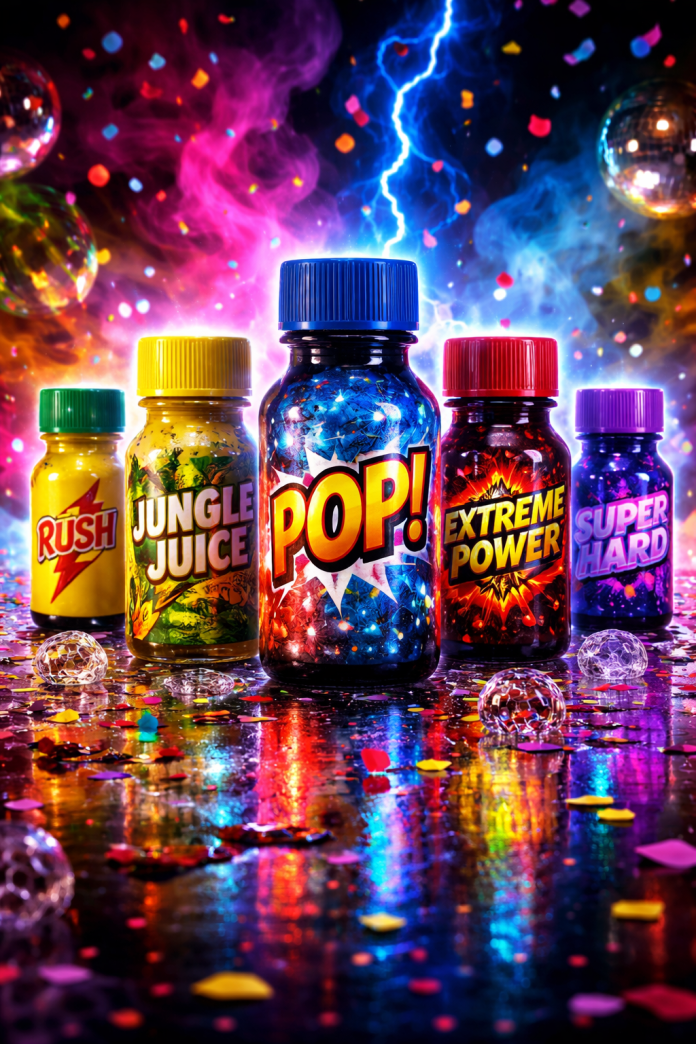
Let’s get straight to it. You’ve probably seen or heard about “poppers,” those small bottles, a whiff here and there, lots of rumors going around. What are they really? Air fresheners? Some kind of party trick? A bedroom aid? The truth: poppers are chemicals you sniff to feel a quick rush, but using them wrong can be risky.
This guide skips the nonsense. We’ll go over what poppers are, what they do, the dangers involved, and how to be safer if you’re around them. Everything’s based on real information, so you get the facts, not the hype.
What Poppers Are (Quick and Simple)
Poppers are a type of chemical called alkyl nitrites. They come as liquid in tiny glass bottles. Sniff the vapor, you get a fast, strong rush that fades almost as fast as it comes.
You won’t find bottles labeled “poppers.” Instead, they’re sold as “room odorizer,” “leather cleaner,” “video head cleaner,” or “nail polish remover.” That’s just a way to get around the law. These products are not safe for human use, even though people inhale them.
What Poppers Aren’t
Don’t get these mixed up:
- They are not energy drinks.
- Never meant to be swallowed.
- Not the same as prescription medicines for heart problems.
How Poppers Work in Your Body
Take a sniff, and here’s what happens. The chemicals turn into something called nitric oxide. This makes your blood vessels relax and open up.
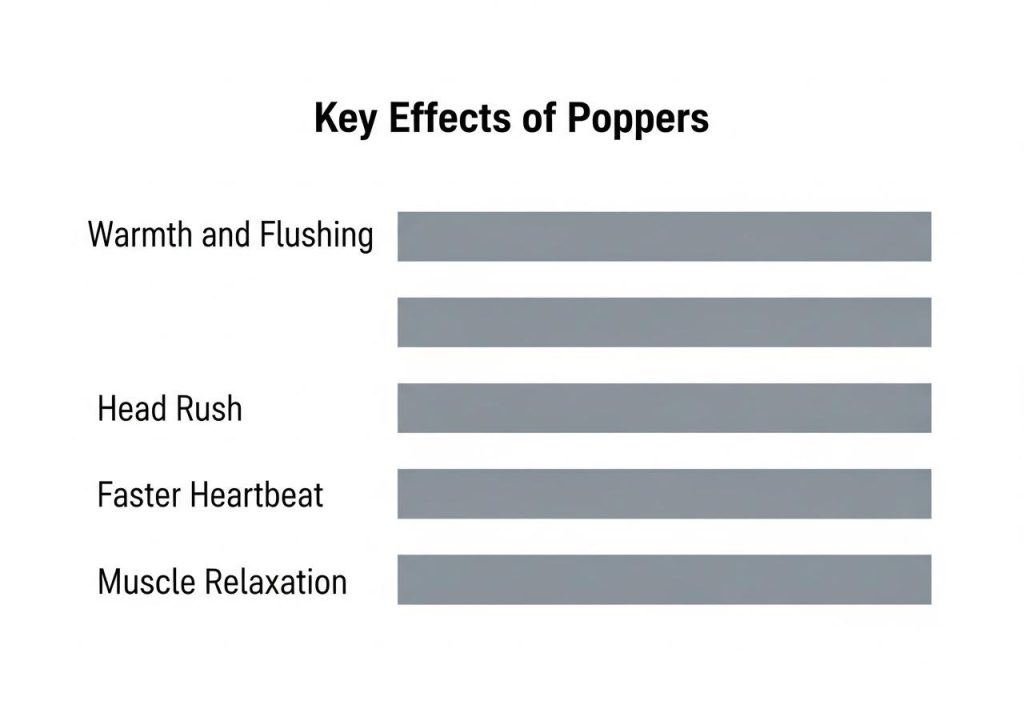
Your blood pressure drops suddenly. Your heart races to keep up. That’s the rush, warmth, a quick head spin, sometimes a dizzy feeling.
Smooth muscles around your body relax too. That includes parts of your throat and back end, which is why some people use poppers for sex.
Quick Chart: What Happens, What You Feel, Why It Matters
| What Happens | What It Feels Like | Why It Matters |
| Blood vessels relax | Warmth, flushing, rush | Blood pressure drops fast |
| Blood pressure drops a lot | Dizziness, lightheadedness | Risk of fainting or injury |
| Heart races | Pounding heartbeat | More work for your heart |
| Muscles relax | Easier movement | Can help with sex, but adds risks |
What Using Poppers Feels Like
Poppers kick in quickly and fade away just as fast. Here’s how people usually describe it.
Typical Short-Term Effects
- Warmth or a flush: Face and body feel warm.
- Head rush: Dizzy, light, sometimes spaced out.
- Heartbeat picks up: A thumping, racing feeling in your chest.
- Brief relaxation or even giddiness: People might feel more relaxed, happier for a minute.
- Headache or nausea: Not uncommon.
Effects Related to Sex
- Muscles relax: This can make sex more comfortable for some.
- Inhibitions drop: Might feel braver or less self-conscious.
- Heightened sensation: Orgasms might feel stronger.
How Quick, How Long
The effects are very short.
- 0–30 seconds: Hits almost right away.
- 1–5 minutes: This is the main rush.
- 5–30 minutes: Effects are mostly gone, but you might still have a headache or feel a bit dizzy.
What’s Actually in Poppers?
“Poppers” is just a nickname. What you’re actually sniffing is a group of chemicals called alkyl nitrites. There’s more than one type, and sometimes the bottle you buy today isn’t the same as one from last year.
What You Might Find in the Bottle
- Isopropyl nitrite (very common)
- Amyl nitrite or isoamyl nitrite
- Pentyl nitrite
- Butyl or isobutyl nitrite (not common anymore where banned)
How These Chemicals Differ
| Property | Isopropyl Nitrite | Isobutyl Nitrite | Pentyl/Amyl Nitrite |
| Chain length | Short/branched | Branched | Longer |
| Volatility | Very high | High | Lower |
| How fast effects hit | Very quick | Quick | Slower |
| How stable | Moderate | Moderate | More stable |
| Legal status | Common | Often banned | Less common now |
Shorter, more flexible chemicals like isopropyl nitrite turn to vapor more easily and hit harder, faster. The longer, straighter ones act slower and last longer.
Formulas have changed mainly because of law changes. When a chemical got banned or flagged as harmful, companies switched to one that’s still legal somewhere. That’s why bottles sometimes say one thing, but tests find something else inside.
Main Risks and Side Effects
Poppers aren’t harmless. Here’s what you really need to know.
Sudden Drop in Blood Pressure
This is the main danger. A quick snort can drop your blood pressure quickly. About 5–10% of people might actually faint. If that happens and you hit your head, things can get bad fast.
Heart and Stroke Risk
If someone already has heart trouble or irregular heartbeats, poppers are more dangerous. The blood pressure drop plus an overworked heart can trigger a heart attack or stroke, though that’s rare.
Methemoglobinemia (Low Oxygen in Your Blood)
Take too much, or even worse, swallow it, and your blood can’t carry oxygen properly. This can turn your lips or hands blue, cause severe shortness of breath, confusion, or even be deadly. Never swallow poppers.
Symptoms to watch:
- Blue or gray lips, skin, or nails
- Severe breathing trouble
- Chest pain
- Serious confusion or sudden tiredness
Eye Problems
Some people notice blurry vision or spots in their sight after using poppers, especially newer chemicals like isopropyl nitrite. Sometimes it goes away; sometimes it doesn’t.
How doctors check for “poppers maculopathy”:
- Ask about recent popper use
- Scan your eyes for subtle changes
- Check for yellow spots or other clues
Vision problems can last a long time if you keep using poppers after a problem starts.
Burns and Skin Problems
The liquid in the bottle is harsh. If it touches your skin, it can burn or leave rashes. Splash it in your eyes or nose? Serious pain and maybe permanent damage.
Risks If You Use Often
- Regular headaches and dizziness can become common.
- Heavy use might weaken your immune system.
- One study found a higher cancer risk in older men with very heavy, frequent use.
What’s Really In the Bottle?
Bottles might not match what the label says. Manufacturers change formulas often, sometimes adding impurities. This means you never quite know what you’re breathing in, or how strong it will be.
Dangerous Combos (Avoid This)
Mixing poppers with other drugs or alcohol increases your risk.
Never Mix with Viagra or Similar Medicines
If you’ve taken sildenafil (Viagra), tadalafil (Cialis), or similar medicines, do not use poppers. Both cause your blood pressure to crash. Together, this can kill you. Wait at least 24 hours after these pills (longer for Cialis).
Other Bad Combos
| Don’t Mix With | Why? |
| ED meds (Viagra, Cialis) | Life-threatening blood pressure drop |
| Heart or blood pressure meds | Makes blood pressure drop worse |
| Stimulants (like ecstasy, cocaine) | Extra strain on your heart |
| Heavy alcohol | Falls, fainting, and more dizziness |
Safer Use Basics
There’s no totally safe way to use poppers, but if you’re exposed, this can lower your chance of harm.
1. Open Windows, Keep Air Moving
Fresh air helps clear out fumes. Don’t take big, deep breaths, less is safer.
2. Keep Away From Fire
Poppers can catch fire quickly. Don’t use them near candles, lighters, or anything with a flame.
3. Don’t Get It On Your Skin or In Your Eyes
Keep the top on, and be careful not to spill. Wash off any that gets on you right away.
4. Sit Down Before Sniffing
If you’re going to inhale, sit down first. This can help prevent a bad fall if you suddenly faint.
5. Use Less, Use Less Often
The more you use, the more problems you may have.
6. Store Like a Dangerous Chemical
Close the bottle tightly, keep it cool and dark, and store it out of reach of kids and pets. Never pour it somewhere else.
7. How To Inhale (If You Do)
No safe dose exists. But if you’re going to:
- Hold the bottle away from your face so you don’t get burned.
- Only breathe in a little.
- Don’t keep sniffing over and over. Let your body recover between uses.
- Never stick your nose in the bottle, and don’t tip it.
- Short, small sniffs are less risky than big, deep ones.
Swallowed Poppers? This Is a Medical Emergency
Swallowing poppers is very dangerous. It burns your mouth and throat, poisons your blood, and can kill.
What to do:
- Call emergency services right away.
- Don’t wait for symptoms. Don’t try to make them throw up.
- Take the bottle with you to the hospital if possible, so doctors know what was swallowed.
Doctors have a treatment, but it needs to happen fast.
When to Get Medical Help After Inhaling
Call for help if someone who used poppers:
- Has chest pain or an unusual heartbeat
- Faints or feels very dizzy, and it won’t pass
- Can’t breathe or has blue/gray lips or skin
- Suddenly can’t see well or notices a blind spot
- Has a seizure
These things can get worse quickly. Don’t wait.
Poppers and Sex: What You Should Know
Poppers can lower your guard and dull pain. That’s why some use them for sex. But it can also raise your risk for STIs, including HIV, often because people skip condoms.
Decide on boundaries before you’re in the mood. Keep condoms and lube handy.
Are Poppers Legal? Read the Fine Print
The law is confusing.
Why Are Labels So Weird?
Calling poppers “leather cleaner” or “room odorizer” helps companies sell them without breaking the law. These labels don’t mean the products are safe.
Avoid Shady or Mislabeled Products
- Don’t buy anything that looks like a drink or shot.
- Avoid bottles with unclear ingredients.
- Throw away bottles that smell off, look wrong, or leak.
- Keep original labels, it may save a life in an emergency.
FAQs
What are poppers for?
Originally, amyl nitrite was given by doctors for chest pain. Now, people use poppers for a fast head rush, pleasant feelings, or to relax muscles during sex.
Are poppers addictive?
You won’t get the same cravings as with things like cigarettes or pain pills, but people can get used to the habit, especially if it’s part of sex for them.
Can poppers kill you?
In rare cases, yes. Swallowing them, mixing them with Viagra/Cialis, or using them if you’ve got a serious heart condition could be deadly.
Will poppers show up on a drug test?
No. Regular work or sports drug tests don’t check for alkyl nitrites.
What does “popper” mean in slang?
It’s the nickname for these inhalant chemicals. It comes from the fact that original bottles had to be popped open.
What’s in a popper?
Mostly alkyl nitrites like isopropyl, amyl, butyl, or pentyl nitrite.
How long do they last?
The main effects hit within about 30 seconds, and last only 1–5 minutes. A headache can last longer.
Can you overdose?
Yes. Signs are severe headache, vomiting, fainting, blue lips/skin, and serious breathing problems.
Why the headache?
Widened blood vessels in your brain are the main reason. Mixing with alcohol makes it worse.
Quick Summary:
- Never swallow poppers. That’s a real emergency.
- Don’t mix with Viagra or similar meds, it could be deadly.
- Sit down, open a window, keep away from fire.
- Watch out for chest pain, blue lips, fainting, or vision changes. Get help.
- Store somewhere safe, out of reach of kids and pets.
- If you’re ever unsure, play it safe and call for medical help. Your health matters.
Disclaimer
The information provided in this article is intended for informational purposes only and does not constitute medical, legal, pharmaceutical, or professional advice of any kind. Express Highs makes no representations or warranties regarding the accuracy, completeness, or suitability of the content for any particular purpose. Readers should not rely on this content as a substitute for advice from a qualified medical professional, legal counsel, or other relevant expert.
The products and substances discussed on this blog may be subject to varying legal restrictions depending on your country, region, or jurisdiction. It is the sole responsibility of the reader to be aware of and comply with all applicable local, national, and European Union laws and regulations before purchasing, possessing, or using any product referenced herein. Express Highs accepts no liability for any consequences arising from actions taken based on the content of this article.
This blog is intended for adults only. By reading this content, you confirm that you are of legal age in your jurisdiction.
Nothing in this article is intended to diagnose, treat, cure, or prevent any disease or medical condition. Any health-related claims discussed are not evaluated by the European Food Safety Authority (EFSA) or any other regulatory body unless explicitly stated.
Express Highs reserves the right to update or remove content at any time without notice. All content is published in good faith and for general informational purposes only.


