

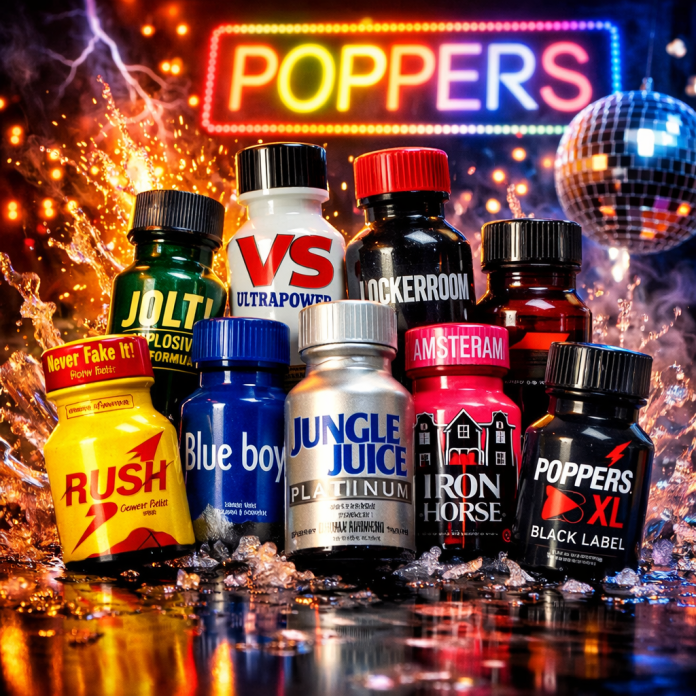
Buying poppers for the first time? It can be confusing. There are a lot of bold claims, not much clear info, and real safety concerns if you make the wrong choice or use them with certain medications. This guide breaks down what matters in 2026: the different types of nitrites, how to spot useful labels, safety warnings, and what’s actually legal where you live. There’s also a checklist for avoiding poor products. All of this is based on health and safety research, plus common questions people have.
If you just want the main points, check the comparison tables and use the “red flags” list. These cover what you really need to think about.
Comparison Table (2026): What the labels mean
Don’t just go by “extra strong” or “super clean” claims. Look for the actual nitrite listed on the bottle. Each type has its own features and risks. Here’s a breakdown:
| Nitrite type on label | Typical onset/duration (seconds to minutes) | Common “feel” people report (non-medical) | Key safety risks | Common legal/regulatory pattern (high-level) |
| Amyl Nitrite (Isoamyl/Isopentyl) | Very fast onset, very short duration. | Often described as a fast, sharp “rush.” | Drops in blood pressure, headache, rare blood issues. | Prescription only in US; regulated elsewhere. |
| Isopropyl Nitrite | Fast onset, short to moderate duration. | Described as a typical effect. | Blood pressure effects, headaches, sometimes vision problems. | Allowed in some EU countries, but laws vary. |
| Isobutyl Nitrite | Fast onset, short to moderate duration. | Similar to isopropyl but varies by user. | Same main risks, plus specific bans in places. | Banned in the EU, some US bans. |
| Butyl Nitrite | Fast onset, short duration. | Classic but very subjective reports. | Can burn your skin, blood pressure drop, headaches. | Banned in France; restrictions common. |
| Pentyl/Propyl Nitrite | Fast onset, variable duration. | Sold under various names, effects similar to others. | Same main risks. | Dependent on specific country rules. |
1. How to compare products
Ignore those “XXXTREME RUSH” slogans. You want information, not just hype. The label should help you decide.
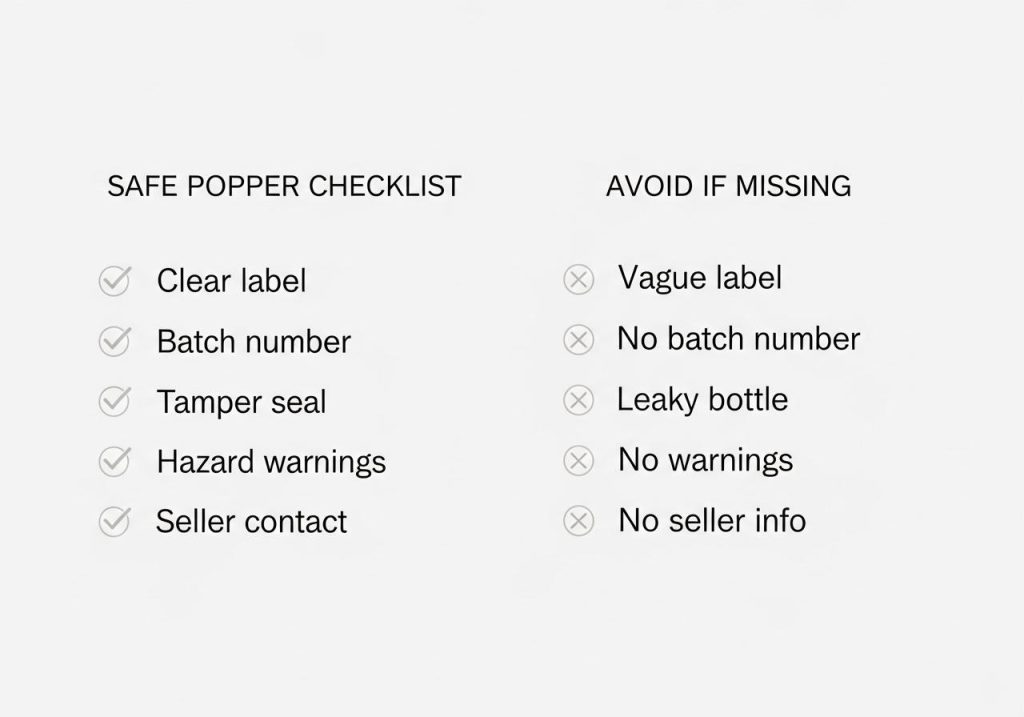
- Label Clarity: Is the nitrite type written out? If it just says “room odorizer” or something vague, that’s a red flag. Some bottles just say “alkyl nitrite” without explaining. Sometimes labels are even wrong. Only a lab can truly confirm what’s inside, so don’t put total trust in just a label.
- Batch/Lot Info: Is there a batch number? This shows the maker tracks what they sell. No batch number? That’s not a good sign.
- Tamper Seals & Cap: Does it have a seal and a cap that won’t leak? Basic but important. Leaky bottles can be dangerous.
- Hazard Warnings: Look for actual warnings like “caustic” or “do not inhale from bottle directly.” If you don’t see these, be cautious.
- Customer Support: Is it clear how to contact the seller or return a product? The best sellers are upfront. If it’s hard to find info, that’s a problem.
- Exaggerated Claims: Ignore stuff like “100% safe” or “medical grade.” All these products carry risk.
Quick Checklist: Pass vs. Fail
PASS:
- Nitrite type listed clearly
- Batch number present
- Tamper seal and solid cap
- Safety/hazard warnings in plain view
- Easy-to-find contact info
FAIL:
- Vague names, no chemical listed
- No batch number
- Bottle leaks or has no seal
- Claims “no side effects” or “approved formula” without evidence
- No way to reach the seller
2. Compare formulas by risk profile
All alkyl nitrites relax blood vessels. That’s what causes their effects and side effects. The “strongest” doesn’t mean “safest.”
- Blood Pressure Drop: This is the main effect. It can make you dizzy or cause you to faint, especially if you’re dehydrated or in a hot space.
- Methemoglobinemia: If you swallow the liquid, you can get very sick, as your blood can’t carry oxygen well. Look out for blue lips or fingertips, trouble breathing, or confusion. Go to the hospital if that happens.
- Chemical Burns: The liquid burns skin and eyes. Be extra careful with spills.
- Who Should Never Use: Some people shouldn’t risk it. If you’re in any of these groups, avoid entirely.
SKIP IF ANY APPLY:
- Heart problems of any kind
- Anemia
- Glaucoma
- Low blood pressure
- Recent brain injury
- Are pregnant
Unsure? Talk to your doctor. Don’t risk it.
3. Compare interactions
Mixing poppers with other meds or drugs is where real danger comes in. Some combinations can be deadly.
| Medication/Substance | What Can Happen | What to Do Instead |
| PDE5 Inhibitors (Sildenafil/Viagra, Tadalafil/Cialis, etc.) | Can cause a severe, even fatal, drop in blood pressure. | NEVER mix. Pick one or skip both. |
| Blood Pressure/Heart Meds | Unpredictable and dangerous blood pressure drops. | Avoid. Ask your doctor first. |
| Stimulants / ADHD Meds | Puts major stress on the heart, mixing opposite effects. | Don’t combine. Too risky. |
| Alcohol & Other Depressants | Makes fainting and accidents more likely. | Best not to combine. |
4. Compare legality
Just because you can order something online doesn’t mean it’s legal for you to own or use it. Laws depend on where you live, the actual chemical, and how it’s marketed.
- United States: A gray area. Amyl nitrite needs a prescription. Other types are sold as “cleaners” to get around the rules.
- United Kingdom: Often not illegal, but this isn’t guaranteed. Laws can shift.
- European Union: Varies. Some types are banned everywhere, others are not.
- France/Germany/Austria: Each has its own rules. Butyl nitrite has been banned in France since the 90s. Germany makes some types pharmacy-only.
Before You Click “Buy”
- Search your own country’s laws first.
- Don’t assume all types are treated the same.
- Online shops that ship globally don’t mean it’s legal to receive. The responsibility is on you.
5. Compare packaging and handling
If the product leaks or the bottle looks cheap, skip it. You want packaging that keeps the liquid safe until use.
- Leak Risk: Poor caps are a common problem. Stick to brands known for good bottles. Store upright. If it arrives damp, handle with care.
- Spill Safety: Treat it like a strong chemical, not a perfume. Don’t pour or transfer it over carpet or somewhere you can’t clean easily.
- “Power Pellet”/Absorbent Pellets: Sometimes there’s a pellet in the bottle. It is meant to keep it fresh. No major risk if it’s there, but don’t eat it.
If It Spills…
- Skin: Rinse with lots of cool water. Change out of any clothes it touched.
- Eyes: Rinse with water for 15 minutes. See a doctor right away.
- If burning continues, get medical help.
6. Compare common side effects vs. emergency signs
You should know the difference between a mild reaction and a real emergency.
| Common (but Unpleasant) Effects | EMERGENCY Red Flags (Call for Help) |
| Headache (very common) | Blue or gray lips, skin, or nails |
| Dizzy or lightheaded | Severe trouble breathing |
| Flushing, feel warm | Chest pain or pressure |
| Weak or nauseous | Seizures |
| Mild confusion | Collapse or pass out |
Headaches happen a lot. But blue lips mean serious oxygen problems. If you see emergency signs, get medical help right away.
7. Compare “best for” scenarios
There’s no single “best” popper for everyone. What’s best for you depends on your needs and your situation.
- New to This: Go for the safest option. Make sure the label tells you exactly what’s inside and has strong packaging. Don’t mix with anything else.
- Experienced and Careful: Look for brands that mention batch numbers and stick to one nitrite type. Consistency makes things safer.
- Sensitive to Headaches: There’s no formula that guarantees no headache. Headaches are a common side effect, but some people find certain types easier to tolerate. Drink water and take it slow.
Mini Scorecard (Rate any product out of 10)
- Label Transparency (0–3 points): Does it name the nitrite?
- Safety Warnings (0–2 points): Are the risks explained?
- Packaging Quality (0–2 points): Does it seal well?
- Support/Returns (0–2 points): Is the seller reachable if there’s a problem?
- Subtract 1 for hype: If it says “100% safe,” deduct a point.
8. Trusted Information
This guide removes the marketing language and sticks to what’s known from research, laws, and common questions. The main goal is simple: help you be informed, not just sold to.
9. Purchasing Poppers: Key Considerations
If you’re planning to buy, there’s more than just picking a brand.
Recommended Online Retailers
No specific stores listed, but look for these features:
- Clear Labeling: Tells you what’s actually in the bottle.
- Honest Policies: Explains shipping, returns, and how to reach support.
- Good Packaging: Uses solid seals and leak-proof caps.
- Contact Info: Easy to get in touch if something’s wrong.
Shipping Costs and Delivery
Delivery time and price change based on where you are and where it’s coming from:
- Speed: 1 to 10 business days is typical.
- Shipping Deals: Some offer free shipping if you order enough. Check their policy.
- Customs/Taxes: Laws about import and taxes vary. Double-check before you buy, as some places ban or heavily restrict nitrite products.
Ingredients Beyond the Main Nitrite
Bottles rarely list everything inside, usually just the main nitrite. There can be solvents or impurities not listed. The only real way to know exactly is through lab tests.
Safe Use and Storage: Step-by-Step
- Opening:
- Keep the bottle upright.
- Open any seal gently.
- Unscrew slowly, watching for pressure.
- Don’t put it right under your nose.
- Using:
- How to Inhale: Breathe in the vapor from a distance, never the liquid.
- Ventilation: Use where air moves well.
- Use Moderately: Less is safer. Repeat use raises risks.
- Avoid Contact: Don’t let it touch skin or eyes.
- Never swallow: Drinking it is very dangerous.
- Storage:
- Close tightly after each use.
- Store upright.
- Keep cool, keep dark: Sun and heat break it down.
- Ventilated storage: Not in a closed, airless drawer.
- Out of reach: Kids and pets especially.
- Don’t leave open: Air reduces potency and safety.
Average Cost Range (2026)
For a 10–30 mL bottle, expect to pay $6–$36, sometimes a bit more for bigger or “premium” bottles. Bulk nitrites meant for industrial use are much cheaper by weight, but those aren’t for personal use.
FAQs (People Actually Ask These)
- Are poppers and amyl nitrite the same thing?
Not always. Amyl was the original, but now poppers might be isopropyl, pentyl, or others, depending on where you are. - Can poppers make you faint?
Yes. The drop in blood pressure can make you pass out. - Why do they cause headaches?
Because the blood vessels in your head widen quickly. - What if it touches your skin?
It can burn. Rinse off with water. - What drugs should never be combined with poppers?
Never mix with Viagra, Cialis, or any similar medications. Fatal results are possible. - Are poppers legal?
Depends on the country and chemical. Laws vary. Check local rules. - When is it time to go to the ER?
If skin or lips turn blue, you have serious trouble breathing, chest pain, seizures, or pass out.
Glossary
- Alkyl Nitrites: The group including amyl, isopropyl, etc.
- Amyl/Isoamyl/Isopentyl Nitrite: The “original” popper, now prescription in many places.
- Isopropyl / Isobutyl / Butyl Nitrite: Other common types.
- Vasodilation: Blood vessels opening wider, causing effects.
- Methemoglobinemia: When blood can’t carry oxygen properly.
- Cyanosis: Skin or lips turning blue due to low oxygen.
- PDE5 Inhibitors: Viagra, Cialis, etc., never mix with nitrites.
Conclusion
Buying poppers online in 2026 means taking safety seriously. Look for clear labels, not exaggerated claims. Don’t mix with ED or blood pressure meds. Know the warning signs of an emergency. Always check your country’s laws before you buy.
Disclaimer
The information provided in this article is intended for informational purposes only and does not constitute medical, legal, pharmaceutical, or professional advice of any kind. Express Highs makes no representations or warranties regarding the accuracy, completeness, or suitability of the content for any particular purpose. Readers should not rely on this content as a substitute for advice from a qualified medical professional, legal counsel, or other relevant expert.
The products and substances discussed on this blog may be subject to varying legal restrictions depending on your country, region, or jurisdiction. It is the sole responsibility of the reader to be aware of and comply with all applicable local, national, and European Union laws and regulations before purchasing, possessing, or using any product referenced herein. Express Highs accepts no liability for any consequences arising from actions taken based on the content of this article.
This blog is intended for adults only. By reading this content, you confirm that you are of legal age in your jurisdiction.
Nothing in this article is intended to diagnose, treat, cure, or prevent any disease or medical condition. Any health-related claims discussed are not evaluated by the European Food Safety Authority (EFSA) or any other regulatory body unless explicitly stated.
Express Highs reserves the right to update or remove content at any time without notice. All content is published in good faith and for general informational purposes only.


