

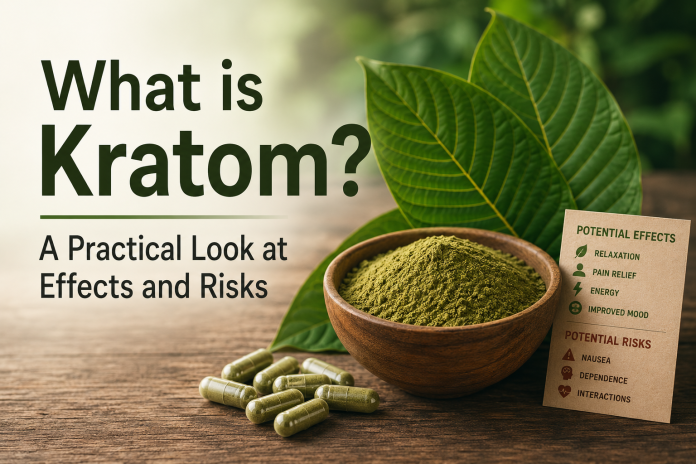
Kratom is a leaf that grows on trees in Southeast Asia. It’s been used for a long time for a mix of reasons, energy, better mood, and pain relief. This guide gives you the facts: what kratom is, what it does in your body, what researchers know, and what you should watch out for if you decide to use it. The info here comes from human studies and safety reports, not just hearsay.
What Kratom Is and Isn’t
Kratom comes from the Mitragyna speciosa tree. Its main active ingredients are plant compounds called alkaloids, specifically mitragynine and 7-hydroxymitragynine.
But let’s clear up some misunderstandings:
- It’s not just like coffee. It interacts with the same opioid receptors targeted by drugs like morphine.
- It’s not “heroin in a leaf.” The effects depend on how much you take. Yes, you can become dependent, but it hasn’t been shown to slow breathing the way heroin or fentanyl can, unless you mix it with other things.
- It’s not an FDA-approved medication.
So, what are people after? Most say they use it for:
- Boosting energy and focus.
- Managing pain.
- Easing opioid withdrawal on their own.
What Kratom Feels Like, Dose Matters
How much you take changes the effect.
Low Doses (Gives Energy)
If you take between 1 and 5 grams, the feeling is mostly stimulating:
- You feel more awake and alert.
- Mood improves, socializing is easier.
- Tasks may feel less tiring.
This effect comes on pretty fast and lasts a few hours.
High Doses (More Relaxing)
Go above 5 grams, and things change. Now kratom feels sedating:
- Calmer, more relaxed.
- Pain might fade.
- Sometimes you feel heavy or sleepy.
But there’s a downside:
- More likely to feel nauseous, dizzy, or sweaty.
- Constipation can be an issue.
- Too much can leave you feeling out of it.
Quick Reference Table
| Dose Range | Main Effects | Possible Side Effects |
| 1–5 g | More energy, focus, improved mood, talkative. | Usually mild, unless used often. |
| 5–8 g | Calming, pain relief, relaxation. | Nausea, dizziness, constipation, sweating. |
| Over 8 g | Heavy sedation, sometimes a sense of euphoria. | High risk of nausea, vomiting, dizziness, “wobbles.” |
In Short
- Low doses stimulate, higher doses sedate.
- More isn’t better. Side effects increase fast at higher and frequent doses.
- Serious problems usually happen when you mix kratom with other things.
How Kratom Works in Your Body
No need to get technical here.
The Main Players
The leaf has many alkaloids, but two matter most:
- Mitragynine: The main one. It’s responsible for most effects.
- 7-hydroxymitragynine (7-OH): Strong, only a tiny amount in raw leaf, but your body also makes some from mitragynine as it breaks it down.
What These Chemicals Do
Kratom’s main chemicals affect several systems in your brain:
- μ-opioid (mu-opioid) receptors: Mitragynine partly triggers these, which explains pain relief and risk of dependence. 7-OH is even stronger at this.
- Delta and kappa opioid receptors: Not as big an effect here.
- Serotonin, dopamine, and norepinephrine: They help explain why kratom can boost mood and energy, especially at lower doses.
It Affects People Differently. Why?
Three grams might feel great to one person and terrible to another.
- How much you take and how often are major factors.
- Different brands and batches have different strengths.
- Your body size, metabolism, and experience matter.
- Mixing with anything else changes all the risks.
What Research Shows: Pros and Cons
The findings so far are mixed.
Where People See Benefits
- Pain: Lots of people say kratom helps. Small studies back this up.
- Opioid Withdrawal: Many use it for this. Surveys say more than 90 percent find it “very effective” for withdrawal symptoms.
- Mood and Anxiety: Common reasons for use, but there’s not much clinical evidence yet.
What We Still Don’t Know
- No large, well-controlled human trials.
- Kratom products aren’t standardized, making studies difficult.
- Effects, good and bad, depend on dose, frequency, and what else you take.
Risks and Side Effects
Don’t ignore these.
The Common Stuff
These complaints show up most:
- Stomach issues: Nausea, vomiting, constipation.
- Nerves: Dizziness, fatigue, irritability, anxiety.
- Heart: Faster heart rate, higher blood pressure, worse with high doses.
Less Common But More Serious
- Seizures: Not common, but possible. Out of 55 poison center calls for kratom, 13 included seizures.
- Liver injury: A small number of people have had serious liver problems.
- Poison center data: Over 3,400 cases in the US over five years, some of them serious.
The Biggest Problem: Mixing with Other Drugs
The biggest safety rule: don’t mix kratom with other substances.
Of 35 kratom-related deaths, 32 involved other drugs. That says a lot.
Risks climb quickly if you add:
- Alcohol
- Benzos (like Xanax)
- Opioids
- Stimulants
Dependence, Withdrawal, and Kratom Use Disorder
Yes, you can become dependent.
Why Dependence Happens
Because kratom works on some of the same brain receptors as opioids, tolerance can build up. Regular, daily users can feel withdrawal if they quit suddenly.
It happens more if:
- You use it every day.
- Your dose is over 5 grams each time.
- You take it three or more times a day.
- You have a history of substance use or mental health problems.
How Common Is Dependency?
Studies say 1 in 4 to 2 in 3 long-term users show signs of kratom use disorder. For many, it’s mild: needing more for the same effect, withdrawal if you stop, cravings, or taking more than you intended.
Withdrawal: What It’s Like
If you quit kratom after using it daily, withdrawal can start in a day or two and last up to a week. Symptoms look like this:
- Physically: Diarrhea, nausea, muscle pain, sweating, chills, insomnia.
- Mentally: Anxiety, irritability, low mood, restlessness, strong cravings.
Get help if you have seizures, confusion, chest pain, or can’t manage.
Getting Off Kratom Safely
This isn’t medical advice. See a doctor if you have a history of heavy kratom or opioid use.
- Taper off slowly. Drop your dose by about 10 percent per week or even more gradually to avoid difficult withdrawal. For heavy users, slower is better, like 5 to 10 percent less every week or so, for two to three months if needed.
- Don’t mix kratom with other drugs or alcohol during your taper.
- For heavy dependence, get support from a healthcare provider. Sometimes medication can help with symptoms. Severe withdrawal (seizures, delirium)? Emergency care is needed.
Product Quality and Contamination
What’s inside the package matters.
Strength Varies a Lot
Mitagynine (the main compound) in kratom powder can range from 3.35 to 59.76 mg per gram. So, “5 grams” doesn’t always mean the same thing, even if it looks the same.
Watch For Contaminants
No standard regulation means higher risks.
- Heavy metals: Some market samples have tested high for lead, nickel, and chromium. Regular use of contaminated kratom could put you over safe limits for these metals. Most companies say they keep lead below 10 parts per million, but not all are testing.
- Microbial contamination: Recalls have happened due to Salmonella. Any legitimate vendor should test and show Salmonella as “not detected.”
Safety Checklist
| Check This | What It Means | Why It’s Important |
| Lab tests available | Third-party certificate of analysis for your batch. | Confirms strength and purity. |
| Contaminants | Check for heavy metals, show “not detected” for Salmonella. | Helps avoid lead, nickel, bacteria, or mold. |
| Alkaloid content | Label includes amount per gram of mitragynine/7-OH. | Lets you know how strong it is and helps dose safely. |
| Labeling | Clear batch info and company contact. | Shows the business is accountable. |
| No wild claims | Avoid “spiked” or “extra-strong 7-OH” products. | These might have added risky or synthetic substances. |
How Kratom Is Sold and Used
There are a few common types.
- Powder: Ground, dried leaves. Cheapest if you buy in bulk ($0.07–$0.15 a gram). Smaller amounts are more expensive.
- Capsules: Pre-measured, easy to use, but cost two or three times more than powder per gram.
- Tea: Made from boiling leaves or powder. Tea bags are the most expensive per dose.
- Extracts or shots: Very concentrated, often expensive. Easy to take too much without realizing.
“Red/Green/White Vein” Strains, Marketing, Mostly
You’ll hear vendors talk about red, green, and white strains, each supposedly doing something different.
Science says otherwise. Color differences aren’t a reliable way to predict effects. Potency and how you’ll feel depend more on how it was grown, processed, and the exact batch.
Safer Ways to Use Kratom
If you’re going to use kratom, some basics can make a difference.
Dosing and Frequency
- Helpful amounts are often in the 1–5 gram range, two or three times daily.
- Effects, especially bad ones, increase at 8 grams or more, or with more than four uses a day.
- Start low, see how your body responds first.
When to Avoid Kratom Entirely
Skip it if:
- You’re pregnant or breastfeeding.
- You have a history of seizures or liver problems.
- You’re using alcohol, benzos, opioids, or other sedatives.
- Before driving or operating machinery.
When to Seek Urgent Help
Call for medical help right away if you or someone else:
- Has a seizure
- Faints or is very confused
- Has chest pain or trouble breathing
- Turns yellow (jaundice, liver warning)
Legal Status, It’s Complicated
Where you live changes everything.
In the US
- Federally, kratom isn’t a scheduled drug.
- The FDA warns about safety risks and is watching it closely; they’re reviewing whether 7-OH should be scheduled.
- Some states have banned it. Others have set up consumer protection laws with age limits and other rules.
- Louisiana will ban kratom starting August 2025, with different penalties depending on the amount.
- Wisconsin treats it as a Schedule I drug, with fines and possible jail.
Always check your local laws before buying or using kratom.
Internationally
Laws differ widely:
- Some countries, like Finland and Denmark, require a prescription.
- Others, France, Poland, Sweden, parts of the UK, have banned it completely.
- Australia and Myanmar don’t allow it, while New Zealand treats it as a prescription drug.
Check the rules before ordering or traveling.
Buying Kratom Online
Buying online can be risky.
- Check if it’s legal where you are.
- Only use sellers who post up-to-date lab results for every batch.
- Don’t trust products that make claims about extra-strong or enhanced formulas.
- Many scam sites copy real ones. Double-check web addresses, and stick to reputable sources. Here’s one: Buy kratom from well-known, transparent stores.
FAQ
Is kratom an opioid?
No. It’s a plant, not a typical opioid, but its chemicals partially work on the body’s opioid receptors. This creates similar effects and risks as opioids, including dependence.
Can kratom help with pain or opioid withdrawal?
Many users say it works for both, and surveys back this up. Reliable studies are limited, though. It’s not a replacement for prescription treatments for opioid problems.
Does kratom make you feel “high”?
At low doses, it acts more like coffee, energizing. At higher doses, it can be relaxing or mildly euphoric.
Why is kratom illegal in some places?
Where it’s banned, it’s usually over concerns about addiction, side effects, or severe complications, like seizures or liver trouble.
Will kratom show up on a regular drug test?
Standard drug tests don’t catch kratom. However, there are special tests for mitragynine and its byproducts that some labs use.
Can you overdose on kratom?
Deaths from kratom alone are very rare. Most serious cases involve mixing it with alcohol, benzodiazepines, opioids, or other drugs. Extracts and mixing raise risks a lot.
Does kratom cause dangerous breathing problems like opioids?
So far, studies where people took kratom haven’t seen the kind of life-threatening breathing slow-down seen with opioid overdoses. But combining kratom with other sedatives makes this a real risk.
In Summary
- Kratom is a plant that affects the brain’s opioid, serotonin, and dopamine systems.
- Low doses boost energy; higher doses slow you down and bring more side effects.
- Dependence and withdrawal are possible, especially with frequent, high use.
- Quality varies a lot; some products are contaminated.
- The biggest risks come from mixing kratom with other substances.
- Laws vary a lot, check yours before using or buying.
Disclaimer
The information provided in this article is intended for informational purposes only and does not constitute medical, legal, pharmaceutical, or professional advice of any kind. Express Highs makes no representations or warranties regarding the accuracy, completeness, or suitability of the content for any particular purpose. Readers should not rely on this content as a substitute for advice from a qualified medical professional, legal counsel, or other relevant expert.
The products and substances discussed on this blog may be subject to varying legal restrictions depending on your country, region, or jurisdiction. It is the sole responsibility of the reader to be aware of and comply with all applicable local, national, and European Union laws and regulations before purchasing, possessing, or using any product referenced herein. Express Highs accepts no liability for any consequences arising from actions taken based on the content of this article.
This blog is intended for adults only. By reading this content, you confirm that you are of legal age in your jurisdiction.
Nothing in this article is intended to diagnose, treat, cure, or prevent any disease or medical condition. Any health-related claims discussed are not evaluated by the European Food Safety Authority (EFSA) or any other regulatory body unless explicitly stated.
Express Highs reserves the right to update or remove content at any time without notice. All content is published in good faith and for general informational purposes only.


