

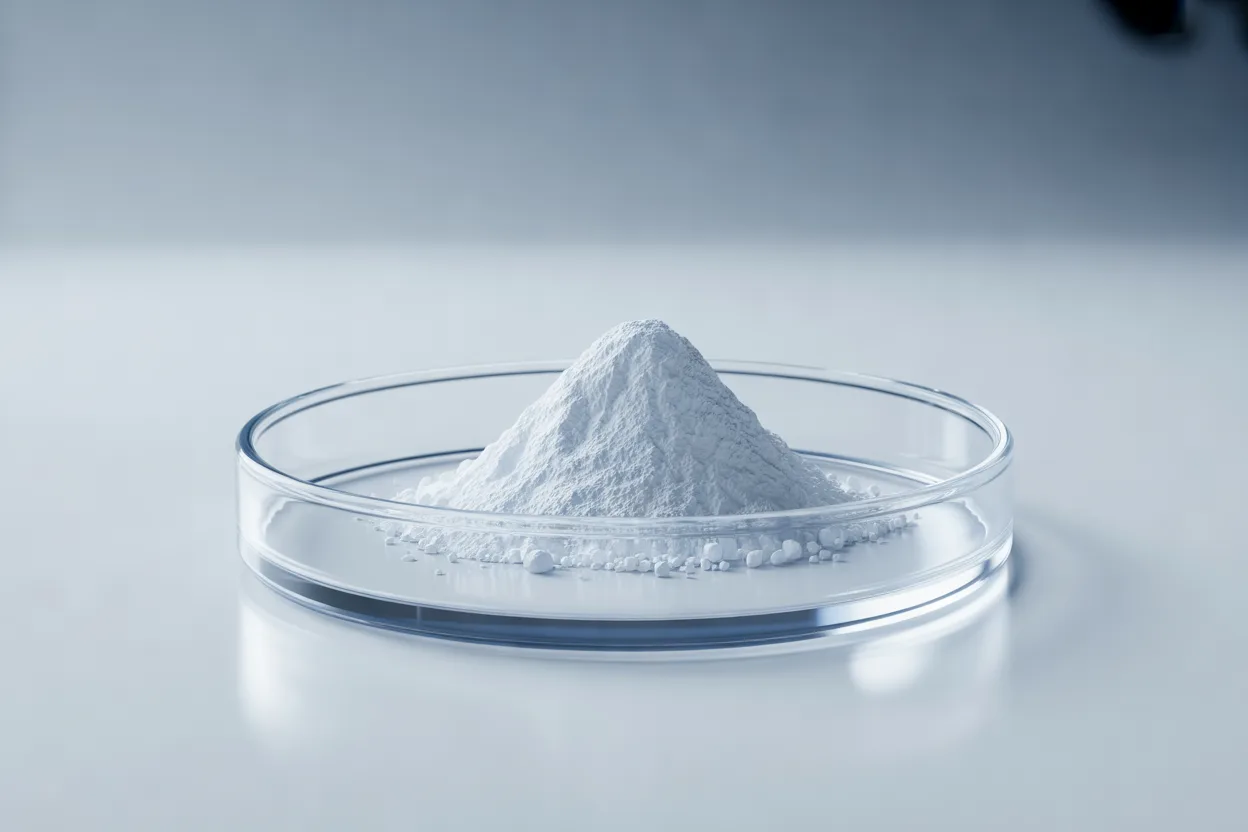
CBD labels can be confusing. You may see isolate, broad-spectrum, and full-spectrum, but they are not the same. CBD isolate is purified cannabidiol. It usually contains 99% or more CBD and no intended THC. It is the simplest CBD type: CBD without the other hemp compounds.
CBD isolate may appeal to people who prefer little taste or smell and want to minimize THC exposure. However, a “THC-free” label cannot guarantee a negative drug test, and consumer CBD products are not proven treatments for every advertised use. For related background, read the Express Highs guide to CBD isolate dosage and use.
What Exactly Is CBD Isolate?
CBD isolate is the most refined form of cannabidiol. It starts as hemp extract, then goes through several cleanup steps until almost everything except CBD is removed. According to the CDC, CBD is one of many compounds found in the cannabis plant, but unlike THC, it does not cause a “high.” A listing such as 99% CBD crystals gives a stated purity and pack size, but a matching batch report is needed to verify the contents.
Here are the main points:
- It is mostly CBD. Good isolate is usually 99% or more cannabidiol.
- It looks like a white powder or crystals.
- It has little to no taste or smell.
- It is stripped of other plant compounds. Terpenes, waxes, fats, flavonoids, and most other cannabinoids are removed.
- It aims for no detectable THC. But product testing still matters, since trace contamination can happen.
CBD is not THC. It does not produce the high linked to THC.
How Is CBD Isolate Made?
CBD isolate is made through a refining process that removes waxes, terpenes, THC, and other plant material. The goal is a very pure CBD product.
Common manufacturing steps
- Crude extraction
- CBD is first pulled from hemp biomass.
- Common methods include supercritical CO₂ extraction and solvent extraction.
- Cryogenic ethanol is often used to reduce wax pickup.
- Hydrocarbons such as butane, propane, hexane, or heptane may also be used in some systems.
- Winterization
- The crude extract is dissolved in ethanol.
- It is chilled to about -20°C to -40°C.
- Waxes and fats harden and are filtered out.
- Fractional purification
- Wiped-film or thin-film distillation is used to separate compounds by boiling point.
- This helps remove terpenes first and raise the CBD concentration.
- Chromatography may also be used to separate CBD from THC and other cannabinoids.
- Crystallization
- The refined oil is dissolved in a non-polar solvent, often n-pentane.
- It is then cooled so CBD forms crystals.
- Remaining impurities stay in the liquid portion.
- The crystals are washed and dried to form the final isolate.
CBD Isolate vs. Other CBD Types
The main difference is what stays in the final product.
CBD Type | Main Contents | THC Content | Taste and Smell | Main Trade-Off |
|---|---|---|---|---|
CBD isolate | CBD only | Intended to be THC-free | Neutral or nearly neutral | No other hemp compounds |
Broad-spectrum CBD | CBD plus other cannabinoids and terpenes | THC removed or very low | Mild hemp taste possible | Trace THC may still be a concern |
Full-spectrum CBD | CBD, terpenes, flavonoids, minor cannabinoids | May include trace THC | More hemp flavor | Higher chance of THC exposure |
The “entourage effect” is the theory that cannabinoids and other plant compounds may act together. It does not establish that broad-spectrum or full-spectrum products are always more effective than isolate. Broad-spectrum products are intended to have THC removed, but testing still matters.
Why People Choose CBD Isolate
People choose CBD isolate for a few clear reasons:
- To avoid THC as much as possible
- To avoid hemp flavor and smell
- To mix into oils, food, drinks, or skincare
- To use a single-ingredient CBD product
If you want terpenes or other cannabinoids, isolate may not be the best fit.
Common Ways to Use CBD Isolate
Form | Primary Usage | Key Features & Onset |
|---|---|---|
CBD Isolate Powder | Raw ingredient to mix into oils, edibles, topicals | Highly versatile; requires careful measurement |
CBD Isolate Oils & Tinctures | Direct oral or sublingual drop use | Pre-mixed; allows simple and accurate serving control |
CBD Isolate Capsules & Edibles | Ingestibles / swallowed products | Pre-measured and convenient; slower onset |
CBD Isolate Topicals | Applied directly to skin (balms, creams) | For localized application only |
CBD Isolate Vape Products | Inhalation | Fast onset; carries vaping-related health risks |
CBD isolate powder
This is the raw form. It can be mixed into oils, capsules, foods, drinks, and topicals. It must be measured carefully.
CBD isolate oils and tinctures
These are pre-mixed products. They are simple to use and allow easy serving control.
CBD isolate capsules and edibles
These are pre-measured and easy to take. Effects may take longer since they are swallowed.
CBD isolate topicals
These are creams, balms, and lotions used on the skin. They are for local use only.
CBD isolate vape products
These work faster than oral products, but vaping has its own health risks. Ingredient quality matters.
How Much CBD Isolate Do You Need?
There is no single CBD dose suitable for everyone. The appropriate amount depends on the product, intended use, health conditions, and medicines. A serving suggestion is not the same as a clinically established treatment dose.
Before considering regular use:
- Check the product’s intended use and stated CBD amount
- Discuss suitability with a clinician or pharmacist
- Track how you feel
- Do not increase the amount to self-treat persistent symptoms
- Ask a clinician if you take medicines
What Does CBD Isolate Feel Like?
CBD isolate does not get you high.
Some people report:
- A calmer feeling
- Less tension
- No clear effect at all
Effects vary based on the product, dose, body size, food intake, and personal response. As noted by Johns Hopkins Medicine, research on CBD for sleep, pain, and anxiety is still developing, and evidence for isolate by itself is limited.
How to Mix CBD Isolate Into Oil
Many people use isolate in MCT oil or another carrier oil. If you make your own tincture, the math matters.
Basic formula
CBD concentration = total CBD in mg ÷ total oil volume in mL
For a 1,000 mg CBD product in a 30 mL bottle:
1,000 mg ÷ 30 mL = 33.3 mg/mL
So the finished oil contains about 33.3 mg of CBD per mL.
Step-by-step method
If your isolate is 99% pure, use this formula:
Required powder = target CBD ÷ purity decimal
So:
1,000 ÷ 0.99 = 1,010 mg of powder
Procedure
- Measure 1,010 mg of CBD isolate for a 99% pure batch.
- Warm the carrier oil.
- Add the powder to the oil.
- Stir until the solution is fully clear.
- Add oil until the final volume reaches 30 mL.
Heating range for mixing
Follow formulation-specific handling instructions. A compound’s melting point is not a universal mixing temperature, and a clear solution alone does not prove that a homemade product is stable or evenly mixed.
Side Effects and Drug Interactions
CBD can cause side effects and may interact with medicines.
Common side effects include:
- Drowsiness
- Fatigue
- Dizziness
- Nausea
- Diarrhoea
- Reduced appetite
- Mood changes
- Rash in some people
Medicines that need extra care
- Blood thinners like warfarin
- Anti-seizure medicines
- Sedatives and alcohol
- Immunosuppressants
- Medicines processed by the liver
The FDA warns that CBD can cause liver injury and interact with medicines. Avoid CBD during pregnancy or breastfeeding, and discuss use with a clinician if you have liver disease or take prescription medicines.
Can CBD Isolate Make You Fail a Drug Test?
Yes, it can happen, even though isolate has far less THC exposure than full-spectrum products.
Why this can happen
- Trace THC contamination may be present
- Labels can be wrong
- Lab testing is not always consistent
- Drug tests can be very sensitive
Drug-Test Results Depend on the Test
Screening and confirmatory tests use different methods and thresholds. THC contamination and inaccurate labelling can affect the result, so a purity claim should not be used as a guarantee.
If you are subject to workplace, legal, or athletic testing, no CBD product can be treated as risk-free.
How to Check CBD Isolate Quality
A good product should have a Certificate of Analysis (COA) from an outside lab. Check the batch number and compare it to the label.
What to look for on the COA
- CBD amount
- THC result
- Residual solvents
- Heavy metals
- Pesticides
- Microbial testing, when listed
How to Interpret Contaminant Results
Check the measured amount, reporting units, detection limit, method, and applicable specification for each contaminant. Limits vary by jurisdiction and product type, so a generic ppm table cannot establish that every CBD product is safe or compliant.
If a COA does not show these results, or if the numbers are missing, think twice before buying.
Is CBD Isolate Right for You?
CBD isolate may be a good fit if you want:
- A neutral taste
- No intended THC
- A simple single-ingredient product
- A clearly specified ingredient suitable for its stated intended use
You may want another CBD type if you want:
- Terpenes and minor cannabinoids
- A fuller hemp profile
- A product containing several hemp compounds, without assuming a proven entourage benefit
FAQs About CBD Isolate
What is CBD isolate?
CBD isolate is purified cannabidiol, usually 99% or more pure, with no intended THC and no meaningful amount of other hemp compounds.
What is the difference between CBD and hemp extract?
Hemp extract is a broad term for oil from hemp. It may be full-spectrum, broad-spectrum, or isolated CBD. CBD isolate is the purified single molecule.
What CBD is good for neuropathy?
Research is still limited. There is no clear proof that CBD isolate treats neuropathy. Talk to a doctor about treatment options.
Is CBD hard on your kidneys or liver?
CBD may affect the liver, especially at higher doses or with other medicines. Kidney effects are less clear, but caution is wise if you already have kidney problems.
Final Takeaway
CBD isolate is the purest common CBD type. It usually contains 99% or more CBD, has little or no taste, and is made by removing waxes, terpenes, THC, and other plant compounds.
Before you buy or use it, remember:
- Check the COA
- Seek advice on suitability and serving size
- Be careful if you take medicines
- Do not assume isolate will pass a drug test
Disclaimer
The information provided in this article is intended for informational purposes only and does not constitute medical, legal, pharmaceutical, or professional advice of any kind. Express Highs makes no representations or warranties regarding the accuracy, completeness, or suitability of the content for any particular purpose. Readers should not rely on this content as a substitute for advice from a qualified medical professional, legal counsel, or other relevant expert.
The products and substances discussed on this blog may be subject to varying legal restrictions depending on your country, region, or jurisdiction. It is the sole responsibility of the reader to be aware of and comply with all applicable local, national, and European Union laws and regulations before purchasing, possessing, or using any product referenced herein. Express Highs accepts no liability for any consequences arising from actions taken based on the content of this article.
This blog is intended for adults only. By reading this content, you confirm that you are of legal age in your jurisdiction.
Nothing in this article is intended to diagnose, treat, cure, or prevent any disease or medical condition. Any health-related claims discussed are not evaluated by the European Food Safety Authority (EFSA) or any other regulatory body unless explicitly stated.
Express Highs reserves the right to update or remove content at any time without notice. All content is published in good faith and for general informational purposes only.

