

CBDV isolate and CBD isolate have similar names, but they contain different cannabinoids. CBDV has its own chemical structure and a much smaller research base. This guide explains what CBDV isolate is, how it compares with CBD, and where the evidence remains limited.
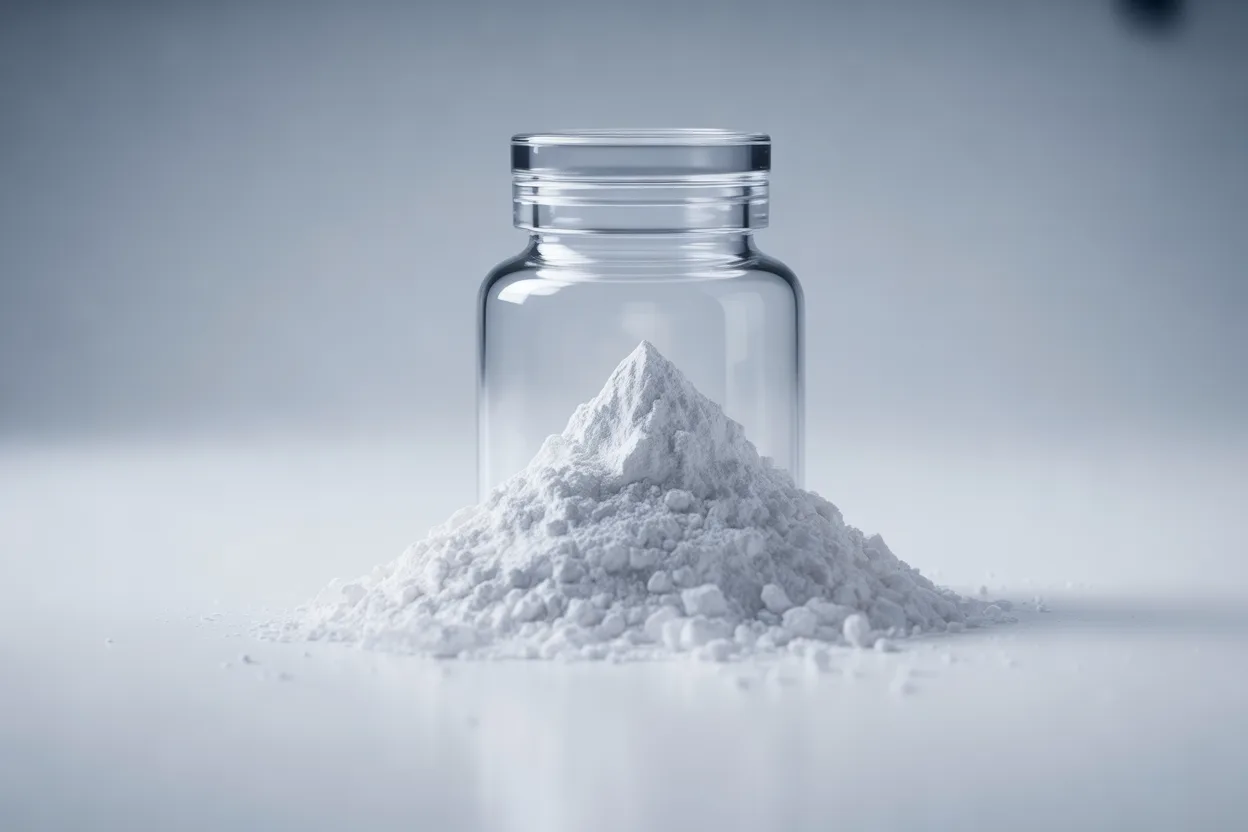
CBDV isolate is a highly purified form of cannabidivarin, often sold as a white powder. It is not known to produce a THC-like high, but it is not a proven treatment for epilepsy, autism, or pain. Purity claims should be checked against a batch-specific lab report.
What Is CBDV Isolate?
CBDV stands for cannabidivarin. It is a naturally occurring compound called a minor cannabinoid found in some cannabis and hemp plants. An isolate is the most refined form you can get. The process removes almost everything else from the plant, including THC, terpenes, waxes, and other cannabinoids.
Here’s what you need to know:
- It is purified cannabidivarin: An isolate usually reaches 98% to 99%+ purity.
- It looks like a powder: Its common form is a white, crystalline powder. It does not dissolve in water, but it does mix with oils and alcohols.
- It is not intoxicating: Pure CBDV does not produce a THC-like high.
Quality is not guaranteed by the word “isolate.” Always check an independent certificate of analysis (COA) to see what is actually in the product.
CBDV at a Glance
CBDV Isolate Property | What It Means |
|---|---|
Full name | Cannabidivarin |
Chemical formula | C19H26O2 |
Molecular weight | 286.42 g/mol |
Side chain | Propyl, with three carbon atoms |
Typical purity | Around 98% to 99%+ |
Intoxicating effects | No known THC-like intoxication |
Natural abundance | Low, so it is harder and more costly to source than CBD |
Common formats | Powder, oils, capsules, and blended formulas |
How CBDV Isolate Is Made
Getting pure CBDV from a plant takes several steps. CBDV-rich seed genetics relate to the starting plant material; CBDV isolate is the purified compound obtained after processing.
- Extraction: Cannabinoids are pulled from hemp or cannabis using methods like CO2 or ethanol extraction.
- Winterization: The crude oil is cooled and filtered to remove fats, waxes, and lipids.
- Purification: Distillation helps separate and concentrate CBDV from other cannabinoids.
- Crystallization: The final step encourages CBDV to form pure crystals, which are then dried into isolate powder.
Because CBDV occurs in smaller amounts than CBD, isolating it can require more specialized processing. A batch-specific lab report is needed to confirm the identity, purity, and contaminant levels of the finished material.
What Does CBDV Do in the Body?
CBDV does not appear to bind strongly to CB1 receptors in the brain the way THC does. Instead, researchers focus on other pathways.
Main targets under study:
- TRP channels: These are involved in pain, temperature, and nerve signaling.
- GPR55 signaling: Scientists study this pathway for its role in seizure activity and nervous system control.
- Endocannabinoid support: CBDV may affect the body’s own cannabinoid system, though the exact role is still unclear.
- Other pathways: Early research suggests minor activity at CB2 and some dopamine-related pathways.
A lab effect does not always become a real-world benefit. That matters here.
CBDV Isolate Effects: What Research Suggests So Far
Most of the useful research on CBDV still comes from cell and animal studies. Human data is limited and mixed.
Seizure and Epilepsy Research
Seizure research is one of the better-studied areas for CBDV. Animal studies have reported anticonvulsant activity, but these findings do not establish that consumer CBDV isolate treats epilepsy.
A trial in adults with focal seizures did not meet its primary goal of reducing seizure frequency compared with placebo. That result should not be presented as proof of a clinical benefit.
Neurodevelopmental Research
CBDV is also being studied for autism spectrum disorder (ASD), Rett syndrome, and Fragile X syndrome.
- Animal models have shown some gains in social behavior and memory.
- Early human studies are mostly about safety and tolerability.
- CBDV is not an approved treatment for ASD, Rett syndrome, or Fragile X syndrome.
- The European Medicines Agency has granted orphan drug status for Rett and Fragile X research. That supports study, but it does not mean approval or proven benefit.
Inflammation, Pain, and Neuroprotection Research
Early work has explored CBDV for anti-inflammatory and neuroprotective effects, including neuropathic pain models. Results are not strong enough to support claims that CBDV treats chronic pain, inflammation, or neurodegenerative disease in people.
CBDV Isolate vs CBD Isolate
They sound similar, but they are different cannabinoids. The main difference is a small change in chemical structure that may affect how they work.
Feature | CBDV Isolate | CBD Isolate | Why It Matters |
|---|---|---|---|
Full name | Cannabidivarin | Cannabidiol | They are different cannabinoids, even if the names are close. |
Side chain | Propyl, 3 carbons | Pentyl, 5 carbons | This small change may affect biological activity. |
Availability | Rare and less common | Widely available | CBDV often costs more and is harder to source. |
Research maturity | Limited human research | Much larger research base | CBD has more safety and clinical data. |
Main research focus | Seizures and neurodevelopment | Broad wellness and medical research | Neither should replace medical care. |
Typical purity | Around 98% to 99%+ | Often 99%+ | High purity does not guarantee a specific effect. |
Intoxicating? | No THC-like high | No THC-like high | Both are very different from THC. |
The bottom line: CBDV is not “stronger CBD.” It is a separate compound with a different supply chain and more uncertainty around its real-world effects.
CBDV vs THC, CBG, and Other Cannabinoids
Compound / Extract | Primary Mechanism / Pathway | Intoxicating Effects | Primary Research Focus |
|---|---|---|---|
CBDV | TRP channels, GPR55 | No | Neurological pathways, seizures, neurodevelopment |
THC | Strong CB1 receptor binding | Yes | Psychoactive effects, pain management |
CBG | Non-CB1 target pathways | No | Inflammation, gut health, antioxidant activity |
Full-Spectrum Extracts | Multiple cannabinoids & terpenes | Possible (contains trace THC) | Entourage effect, broad plant benefits |
CBDV vs THC
This one is simple. THC gets you high by activating CB1 receptors. CBDV does not. CBDV research focuses on neurological pathways, not recreational effects.
CBDV vs CBG
Both CBDV and CBG are non-intoxicating minor cannabinoids. But they are studied for different reasons. CBDV research leans toward seizure activity and neurodevelopment. CBG research is often focused on inflammation, antioxidant activity, and gut health.
CBDV Isolate vs Full-Spectrum Cannabis Extracts
A CBDV isolate contains almost only CBDV. A full-spectrum extract contains a mix of plant compounds, which may include CBD, small amounts of THC, terpenes, and other cannabinoids. Full-spectrum products carry a higher chance of THC exposure.
If you want to explore more, check out our other cannabinoid guides.
Does CBDV Isolate Cause a High?
No. CBDV isolate is not known to cause a THC-like high.
However, the effect of a product can depend on a few things:
- The actual CBDV amount.
- The presence of other cannabinoids, such as THC, in a poor-quality product.
- Your own metabolism and sensitivity.
- The dose and how you use it.
This is why third-party lab reports matter.
CBDV Solubility and Absorption
CBDV has poor water solubility. The carrier, formulation, and conditions of use can affect how much is absorbed, so findings from one preparation may not apply to another.
Research formulations may use oils or specialized delivery systems. Precise solubility limits and heating instructions require data for the specific formulation; they should not be assumed from CBD or other cannabinoids.
CBDV Isolate Safety and Side Effects
Early studies suggest CBDV is generally tolerated, but long-term safety is still not known.
Common side effects reported in research include:
- Digestive issues: Diarrhea and nausea.
- Nervous system effects: Sleepiness, dizziness, and headache.
- Rare serious events: One clinical trial reported a serious intoxication-like event in a participant.
- Lab findings: An in-vitro study raised a genotoxicity flag. This does not prove harm in people, but it needs more study.
CBDV Drug Interactions and Who Should Avoid It
CBDV’s interaction profile is not fully established in people. A doctor or pharmacist should review potential interactions before it is combined with prescription medicines.
Follow this safety checklist:
- Talk to a doctor or pharmacist before use if you take any prescription drug, especially seizure meds, antidepressants, blood thinners, or sedatives.
- Do not self-treat epilepsy or any serious health condition with CBDV isolate.
- Avoid use during pregnancy or breastfeeding because safety data is not enough.
- Stop use and get medical advice if you get severe dizziness, confusion, or an allergic reaction.
CBDV Dosage: Why There Is No Standard Consumer Dose
There is no approved consumer dose for CBDV isolate.
Clinical studies have used doses such as 400 mg per day or 800 mg twice daily under medical supervision. Those amounts are not a safe guide for personal use. Body weight, other drugs, and product purity all affect risk.
Storage and Shelf Life
CBDV isolate can degrade if it is exposed to heat, light, air, or moisture for too long.
Best Storage Conditions
Follow the storage conditions and expiry date provided for the specific batch:
- Store in a cool, dry place at 15 to 25°C (59 to 77°F).
- Use airtight containers.
- Keep it in opaque or amber packaging to reduce UV exposure.
- Refrigerate only if the manufacturer recommends it.
- Keep the material in its original, clearly labelled packaging and away from children and pets.
Why CBDV Prices Vary
CBDV can cost more than widely available CBD because of differences in supply and processing. Compare the total cannabinoid content, purity, testing, package size, and delivery costs using current product information. There is no single reliable market price for every grade or order size.
Is CBDV Isolate Legal?
The legality of CBDV depends on where you live.
Hemp origin and low THC content do not by themselves establish that a finished CBDV product can be sold or used legally.
Rules can differ for research materials, foods, supplements, cosmetics, and other product types, as well as by country and state.
- Check local laws before buying, traveling with, or importing CBDV products.
How to Choose a CBDV Isolate Product
If you decide to buy CBDV isolate, check the basics:
- Look for a recent COA: It should show CBDV potency, batch number, and lab name.
- Confirm THC levels: Make sure THC is non-detectable or within legal limits.
- Check for contaminant testing: Heavy metals, pesticides, residual solvents, and mold should be included.
- Avoid medical claims: Do not trust products that claim to cure or prevent disease.
- Compare actual milligrams: Focus on total CBDV content, not marketing language.
Analytical Testing and COA Standards
A lab should not treat CBDV as if it were CBD. The compounds must be measured separately.
Testing Need | Best Practice |
|---|---|
Primary test method | Validated HPLC-PDA/UV |
Confirmation tools | LC-MS or UHPLC-QTOF-MS |
Reference standards | Use separate Certified Reference Materials (CRMs) for CBDV and CBDVA |
COA reporting | List distinct results for CBDV, CBDVA, and CBD |
Why this matters | CBD and CBDV are different homologs, so CBD standards cannot be used to infer CBDV levels |
Accurate testing is important because CBDV, CBDVA, and CBD can be confused if the method is weak or the reference material is wrong.
Frequently Asked Questions About CBDV Isolate
Is CBDV stronger than CBD?
CBDV is a different compound, not a stronger version of CBD. It has a different research focus and far less human safety and efficacy data.
Can CBDV isolate show up on a drug test?
A CBDV product should not be treated as drug-test safe. THC contamination, inaccurate labelling, and differences between testing methods can create uncertainty.
Is CBDV isolate better than full-spectrum CBD?
Neither is universally better. An isolate is intended to contain one purified cannabinoid, while a full-spectrum extract contains several plant compounds and may include THC. Testing is needed to confirm what either product contains.
Is CBDV approved as a medicine?
No. CBDV is still an investigational compound. It does not have an FDA-approved medical use for any condition.
Key Takeaways
The main points are:
- CBDV isolate is purified cannabidivarin, a rare, non-intoxicating cannabinoid that is different from CBD.
- It differs from CBD chemically. CBDV has a three-carbon side chain, while CBD has a five-carbon chain.
- Research is still early. Findings on seizures, neurodevelopment, and pain are not confirmed medical facts.
- Safety comes first. Check lab reports, know your local laws, and talk to a doctor if you have a health condition or take other medication.
Disclaimer
The information provided in this article is intended for informational purposes only and does not constitute medical, legal, pharmaceutical, or professional advice of any kind. Express Highs makes no representations or warranties regarding the accuracy, completeness, or suitability of the content for any particular purpose. Readers should not rely on this content as a substitute for advice from a qualified medical professional, legal counsel, or other relevant expert.
The products and substances discussed on this blog may be subject to varying legal restrictions depending on your country, region, or jurisdiction. It is the sole responsibility of the reader to be aware of and comply with all applicable local, national, and European Union laws and regulations before purchasing, possessing, or using any product referenced herein. Express Highs accepts no liability for any consequences arising from actions taken based on the content of this article.
This blog is intended for adults only. By reading this content, you confirm that you are of legal age in your jurisdiction.
Nothing in this article is intended to diagnose, treat, cure, or prevent any disease or medical condition. Any health-related claims discussed are not evaluated by the European Food Safety Authority (EFSA) or any other regulatory body unless explicitly stated.
Express Highs reserves the right to update or remove content at any time without notice. All content is published in good faith and for general informational purposes only.


