

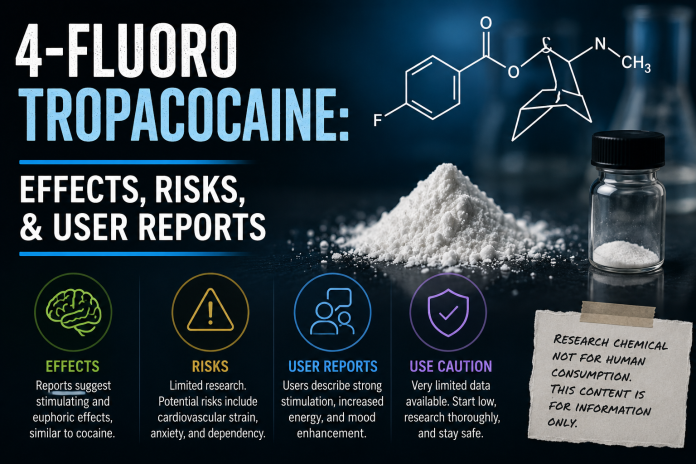
4-Fluorotropacocaine is a lab-made stimulant. People use it hoping for a quick, energetic high. It feels a lot like cocaine but with some key differences.
It works by stopping the brain from clearing away dopamine, norepinephrine, and serotonin. Serotonin effects are stronger here than with cocaine. This makes anxiety and psychosis more likely.
What you might feel:
- Rush of energy, strong sense of euphoria.
- Talkative, socially confident.
- Can’t sleep, feel “wired.”
Main dangers:
- Heart races, blood pressure goes up.
- Panic attacks, paranoia, even psychosis.
- Easy to get hooked, rough comedown.
It lasts longer than cocaine, mainly because of a fluorine atom added to the compound. Most of what we know is from user stories and case studies. No official studies on humans have determined exact timing or dosage.
| Aspect | Details |
| Drug type | Synthetic stimulant, “tropane” style |
| Main effects | Euphoria, energy, chatting a lot |
| Risks | Psychosis, heart issues, anxiety spikes |
| Duration | Longer than cocaine |
| Evidence | Stories from users, case reports |
So, What Is 4-Fluorotropacocaine?
Chemically, it’s called 3β-(4-fluorobenzoyloxy)tropane. The formula is C₁₅H₁₈FNO₂ and it weighs about 263 grams per mole.
The fluorine atom helps it stay in your body longer than regular cocaine. It also doesn’t have a chemical part called a C2 methyl ester, which changes how it affects serotonin in your brain.
This isn’t the same as 4′-fluorococaine. Easy to mix them up, but their structures aren’t the same.
| Property | 4-Fluorotropacocaine | 4′-Fluorococaine |
| Formula | C₁₅H₁₈FNO₂ | C₁₇H₂₀FNO₄ |
| Weight | 263.31 g/mol | 321.34 g/mol |
| Structure | 3-(p-Fluorobenzoyloxy)tropane | Has one more methyl ester part |
Skipping the methyl ester means it interacts a bit differently with brain chemicals than other cocaine-like drugs. It also numbs tissue like a local anesthetic.
How It Affects Your Brain
This drug blocks:
- Dopamine (makes you feel good, want more)
- Norepinephrine (keeps you alert)
- Serotonin (boosts mood but can turn into anxiety)
The serotonin effect is much stronger than cocaine, bringing more risk of panic or even psychosis. The fluorine part makes these effects last longer.
Short-Term Effects
Hits in minutes or can take up to an hour.
The highs:
- Euphoria, buzzing energy.
- Chatty, open, ready for social situations.
- Overall stimulation.
The drawbacks:
- Heart pounding, blood pressure high.
- Big pupils, dry mouth, sweating.
- Numb nose if you snort it.
- Thoughts race; can turn to paranoia.
People often want to take more to keep the feeling going. Some mix it with alcohol or anxiety pills hoping to soften the edge or get some sleep. There aren’t clear rules on doses, so mixing gets risky fast.
Immediate Health Risks
Doctors have seen these side effects in emergency rooms:
Body:
- Heart rates over 120, very high blood pressure.
- Chest pain, trouble breathing.
Mind:
- Waves of panic.
- Hallucinations, delusions, psychosis.
If you take too much, confusion and aggression can happen and you might need hospital care. No standard treatment plans exist for this drug yet.
| Intervention | What it does | How fast |
| De-escalation | Calms things down first | Right away |
| Benzos | For severe agitation | Depends |
| Antipsychotics | Haloperidol or Olanzapine injections | 15-30 minutes |
Safer approach: don’t redose, don’t mix with other drugs, and get help if you feel pain or see things that aren’t there.
Long-Term Effects and Potential Harm
There aren’t any official studies, just experiences with similar drugs.
Mentally: Days to weeks of anxiety and not sleeping. Paranoia can stick around for over a week.
Physically: Damage to blood vessels, loss of feeling in your nose.
Addiction, Crash, and Withdrawal
Because of all the dopamine, this drug is hard to stop using. People binge.
Crash: Brain fog, uneasy feeling, maybe even depression.
Withdrawal: Cravings, the shakes, can’t sleep, paranoia. Some clear up in a couple of days; others need longer.
How Does It Stack Up Against Cocaine, Ecstasy, and “Bath Salts”?
- Cocaine: Both hit dopamine, but this one also affects serotonin more strongly and lasts longer, which means more risk of psychosis.
- MDMA: Like Ecstasy, it boosts serotonin but has a more tense, anxious edge.
- Bath salts: Usually a mystery mix, so effects can be very intense.
| Drug | Main target | How long does it last? | Main risks |
| Cocaine | DA, NE, 5-HT | Short | Heart, addiction |
| 4-Fluorotropacocaine | DA, NE, serotonin | Medium to long | Psychosis, anxiety |
| MDMA | 5-HT, DA, NE | Medium | Overheating, serotonin dangers |
| Bath salts | DA, NE, 5-HT | Medium to long | Agitation, psychosis |
Legal Status
- Germany: Controlled, legal only for research.
- UK: Illegal under the Psychoactive Substances Act.
- US: Considered a Schedule II analogue.
What Users Say
User forums like Reddit and Bluelight:
Pros: Feels like cocaine, numbs like it, strong hit of energy.
Cons (and most common): Anxiety swings back hard, can’t sleep, binge pattern, panic spells.
People often enjoy the first rush but end up feeling wiped out afterward, sometimes for more than a day.
Why You Can’t Trust Powders Labeled 4-Fluorotropacocaine
It’s often mixed with other strong stimulants like desoxypipradrol, sometimes sold as “Whack”.
| Expectation | Reality |
| Pure drug | Plus unknown chemicals |
| Reliable dose | Usually unknown amount |
| Safer experience | Actually a risky mix |
Heart gets overstimulated.- Drugs can interact in unpredictable ways.
- Potency and purity vary a lot.
Ways to test (common NPS lab tech):
| Method | What for | Time | Cost |
| GC-MS | Spot the drug | 10 min | $50+ |
| HPLC | How much is there | Time varies | $50+ |
| LC-MS/MS | Checks for “new” drugs | Varies | $50+ |
| UHPLC-HRMS | Double-checks identity | Varies | $474 |
| FTIR | Quick yes/no | 15 min | $20-40 |
Drug shows up in urine for 1 to 2 days. Lab results can take up to a week. No tests are designed specifically for this drug though.
Playing It Safe If You’re Around 4-Fluorotropacocaine
Best option? Don’t use it.
- If you do, take a small amount and don’t take more.
- Don’t mix with other uppers or with alcohol.
- Stay away if you have heart or mental health issues.
- Make sure someone sober is with you.
- Drink water.
If you have chest pain or see things that aren’t real, get medical help right away.
“Research Chemical” Shops and the Real Risks
You can buy 4-Fluorotropacocaine at verified stores online. But using it still carries every risk mentioned above.
What’s Proven (and Not) About 4-Fluorotropacocaine
What we know: It blocks dopamine, norepinephrine, and serotonin reuptake and can cause psychosis or heart issues.
What we don’t: No real data on safest dosages, mixing with other drugs, long-term effects, or even lethal dose. No research studies have established this.
Final Word: Is It Worth the Trouble?
Higher risk for anxiety and psychosis than cocaine. Usually not pure. Strong crash after use and high addiction risk. Best to leave it alone.
Frequently Asked Questions
1. Is coca a vasodilator?
No, cocaine actually narrows blood vessels.
2. What is 4-fluorococaine?
It’s a different chemical from 4-Fluorotropacocaine. In the US, it’s Schedule II.
3. What is Tropacocaine HCL used for?
Mainly for lab research and some imaging studies. Not approved medicine.
4. What is fluoroamphetamine?
Another kind of stimulant, but not related to the “tropane” style drugs.
Disclaimer
The information provided in this article is intended for informational purposes only and does not constitute medical, legal, pharmaceutical, or professional advice of any kind. Express Highs makes no representations or warranties regarding the accuracy, completeness, or suitability of the content for any particular purpose. Readers should not rely on this content as a substitute for advice from a qualified medical professional, legal counsel, or other relevant expert.
The products and substances discussed on this blog may be subject to varying legal restrictions depending on your country, region, or jurisdiction. It is the sole responsibility of the reader to be aware of and comply with all applicable local, national, and European Union laws and regulations before purchasing, possessing, or using any product referenced herein. Express Highs accepts no liability for any consequences arising from actions taken based on the content of this article.
This blog is intended for adults only. By reading this content, you confirm that you are of legal age in your jurisdiction.
Nothing in this article is intended to diagnose, treat, cure, or prevent any disease or medical condition. Any health-related claims discussed are not evaluated by the European Food Safety Authority (EFSA) or any other regulatory body unless explicitly stated.
Express Highs reserves the right to update or remove content at any time without notice. All content is published in good faith and for general informational purposes only.


